Bodice
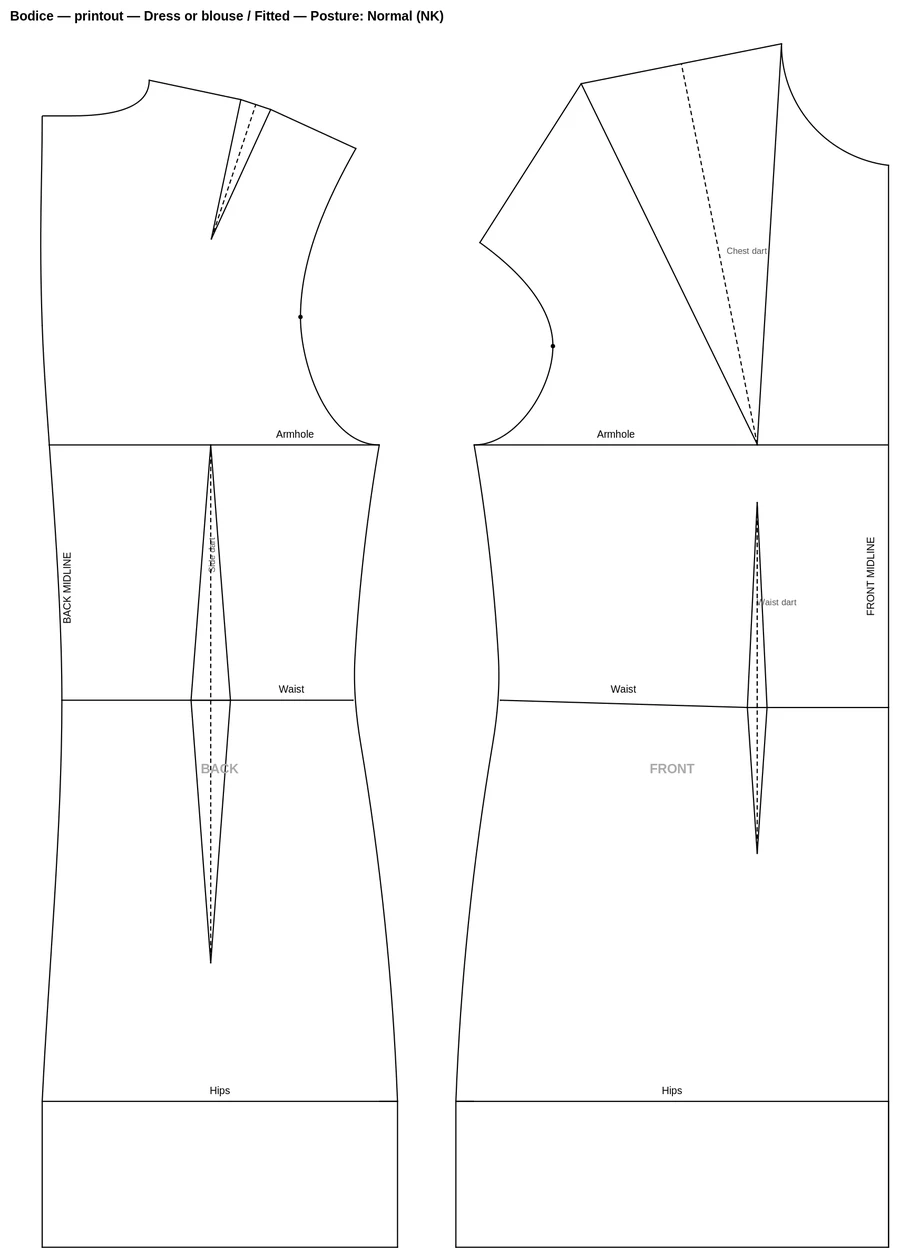
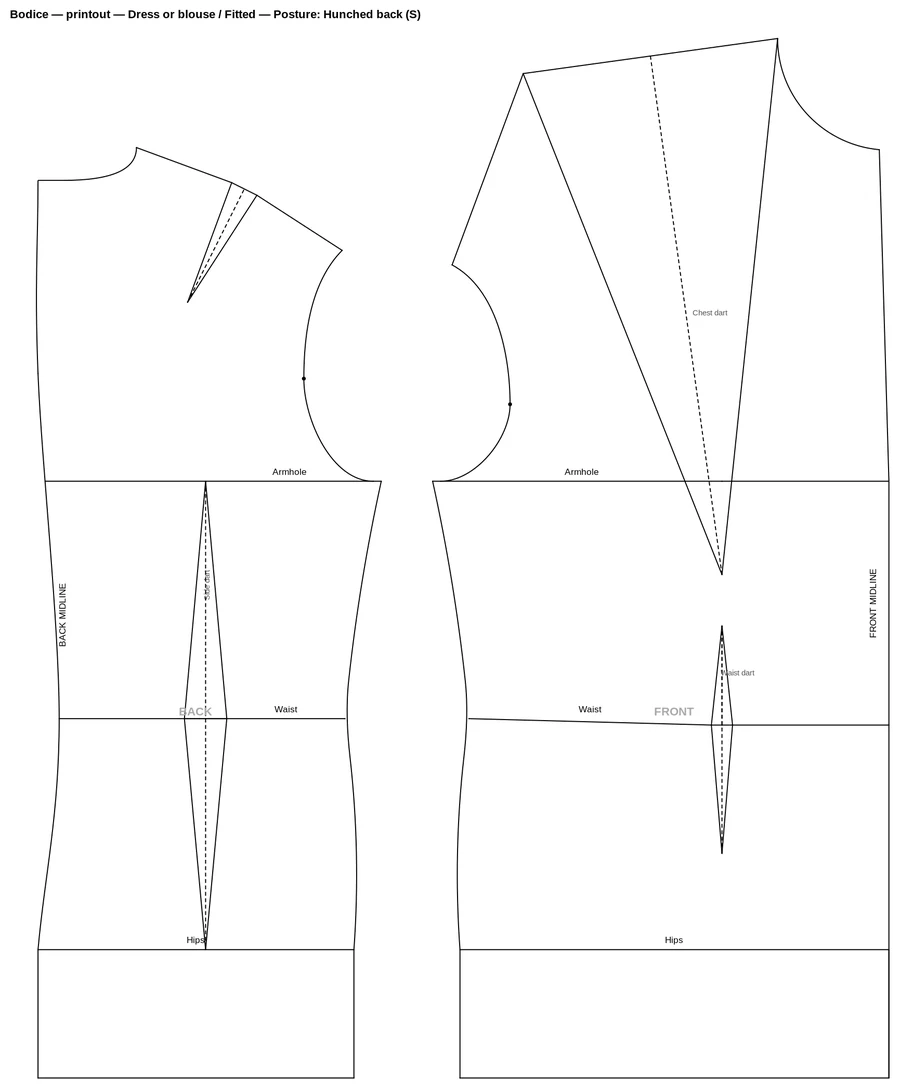
Front and back bodice with darts, seamlines, and grainlines.
 Tailor Base Patterns
A hand-drafted bodice sloper takes an experienced patternmaker 1–3 hours. Tailor Base Patterns generates yours in under 10 seconds.
Generate a professional bodice, sleeve, or skirt block from your exact body measurements - posture-adjusted, print-ready.
Not sure how to measure? See the illustrated guide →Real output, not a mockup
Built for people who already draft patterns — tailors, patternmakers, and students who know how to read a sloper, manipulate darts, and take accurate body measurements. This tool generates base blocks; turning them into a finished garment is on you.
Generated by the app itself from the built-in “Sample Person” measurements — fitted, posture-detected automatically. Every dart, seamline, and grainline is calculated, not drawn by hand.
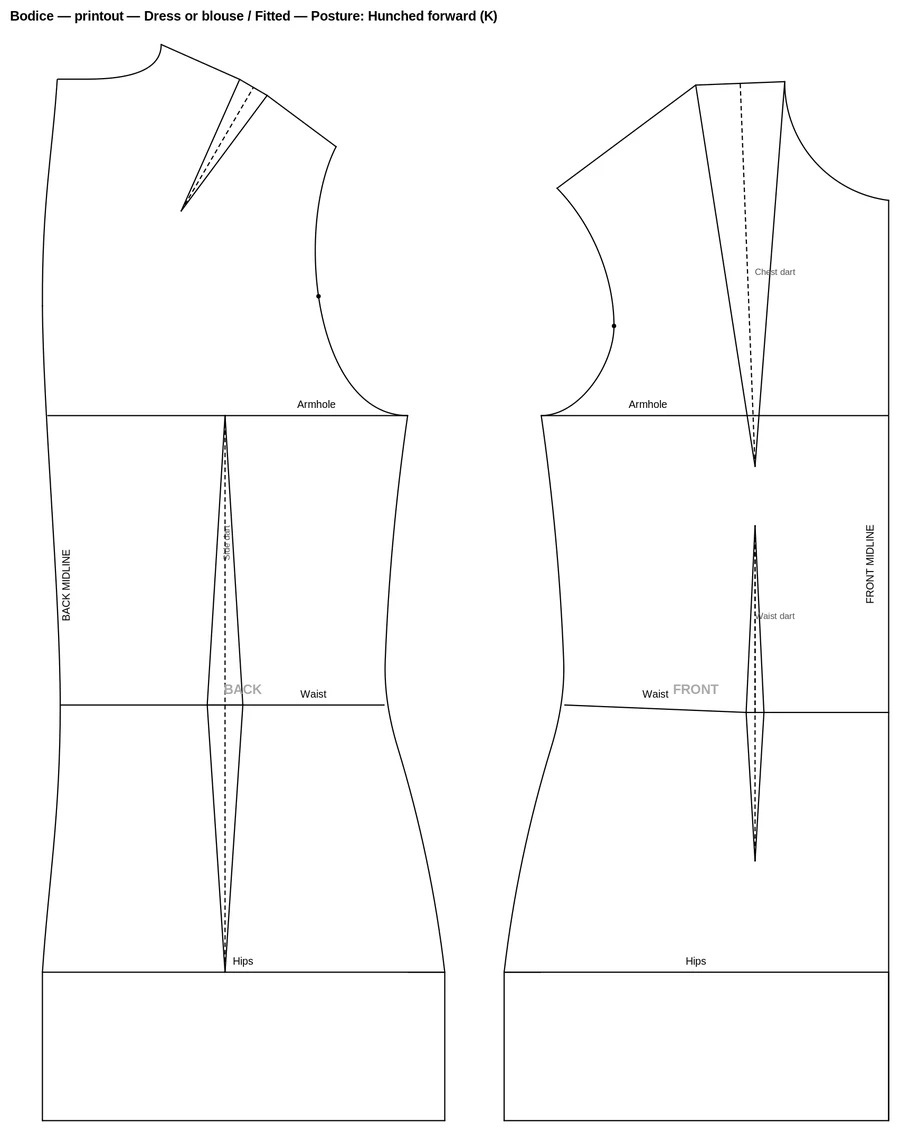
Bodice
Front and back bodice with darts, seamlines, and grainlines.
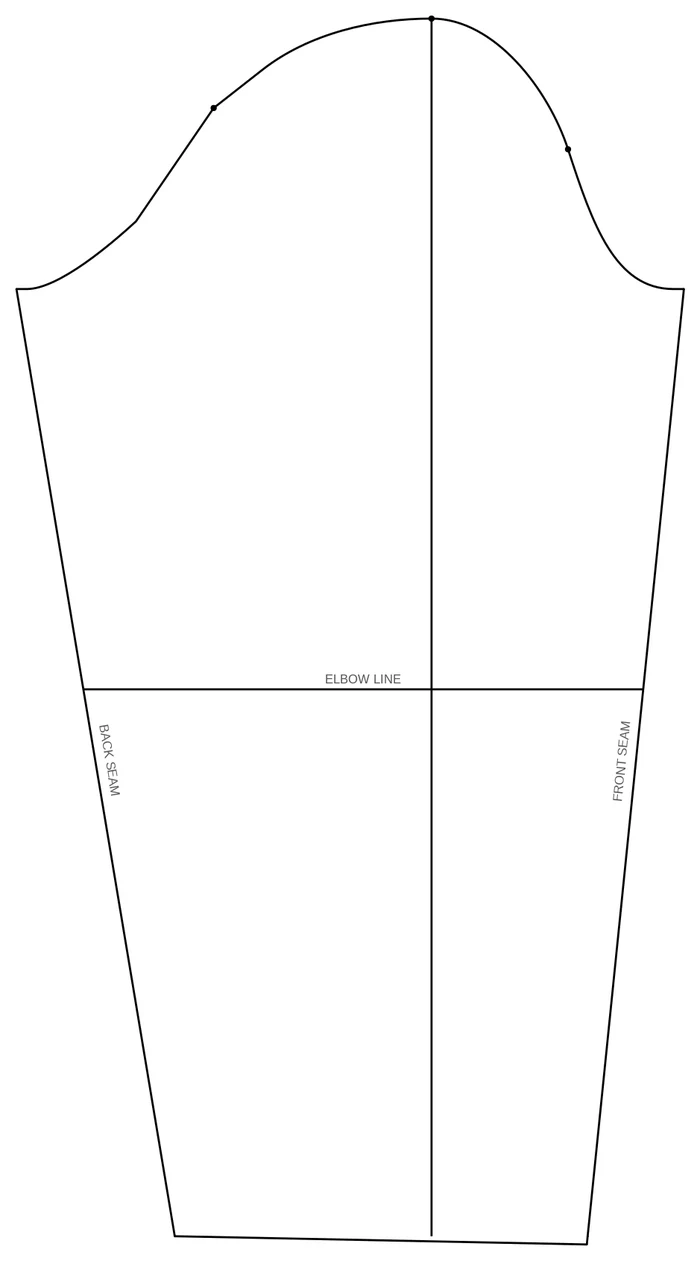
Bodice + Sleeve
A one-piece sleeve generated to match the bodice armhole.
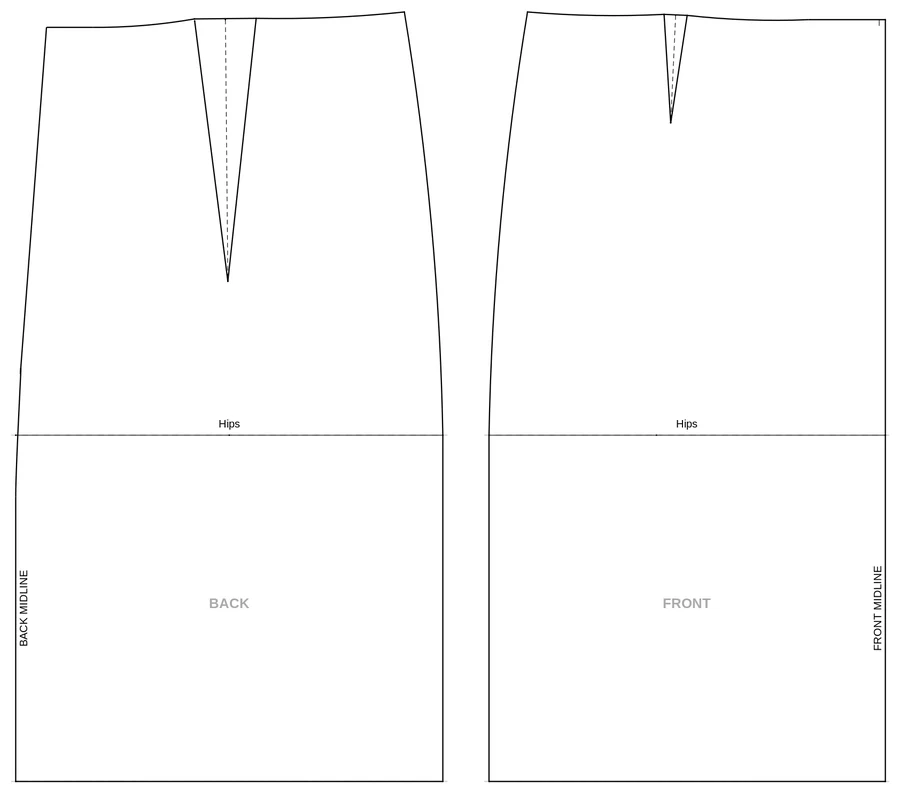
Skirt
Front and back skirt blocks with calculated darts and grainlines.
Posture & fit, automatically
Three real saved measurement sets, same bodice block, three different results — not just a different size. Posture is detected from the gap between your front and back waist length; bust size scales the front panel and dart directly from your own measurements.
The problem with drafting by hand
Every base block starts the same way — measure, calculate, draft, true the lines, and redo it when a measurement was off. Tailor Base Patterns skips straight to the result.
By hand
~1–3 hours per block
With Tailor Base Patterns
Under 10 seconds
Draft once, generate forever — save your measurements and every future block starts from zero effort, not zero information.
How it works
Enter measurements
Fill in your body measurements with illustrated guides, or start from a standard size (XS–XL).
Choose garment & fit
Pick a pattern scope and dial in your fit level.
Generate
Posture-adjusted pattern calculated instantly.
Download
A4 PDF, plotter PDF, or SVG — ready to print.
Measure with confidence
A pattern is only as accurate as the measurements behind it. The free illustrated guide shows exactly where to place the tape for every measurement — read it before you sign up, no account needed.
For tailors & repeat clients
Every measurement set can be saved for future use — if you’re a tailor, save your clients’ measurements once and reuse them anytime.
One named set per client
Save as many measurement sets as you like — a client, a family member, a project — each under its own name.
Reorders in seconds
No re-measuring for a repeat order, a new garment, or a fit check. Load the saved set, generate, done.
Always up to date
A client's measurements change — update the set once and every future pattern for them uses the new numbers.
Questions & answers
Yes. The drafting engine is based on Единая методика конструирования одежды СЭВ (ЕМКО СЭВ), known in English as the EMKO CMEA method — a garment pattern-drafting system developed in the USSR between 1975 and 1985 by the Central Research Institute of the Garment Industry (CNIISHPI) for standardized mass-production clothing manufacturing across the Eastern Bloc. Tailor Base Patterns uses it as the base for bodice, sleeve, and skirt block (sloper) generation, which is why precise, accurate input measurements matter so much for the result. See the full history of the method.
How our pattern construction works
Most home-sewing pattern generators start from a small handful of measurements (bust, waist, hip) and scale a standard block to fit. Our drafting engine takes a more detailed path:
The result is a first-draft block tailored to your actual body shape and posture — not a generic size adjusted after the fact.
Background
In short: this is a real, decades-tested industrial drafting standard — not something we invented — which is why getting your measurements right matters so much for the result.
The method used to construct patterns comes from the USSR era, and is called Единая методика конструирования одежды СЭВ(ЕМКО СЭВ), which translates to the "Unified Method of Clothing Design of the CMEA" (EMKO CMEA). It is historically one of the most significant, scientifically grounded, and comprehensive methods for mass-production garment pattern making.
About the method
The method was developed with the primary goal of unifying and standardizing industrial clothing manufacturing. Its core characteristics include a scientific approach — the draft construction is based on extensive anthropometric studies and precise mathematical calculations — and universality — it provides a single algorithm, notation system, and approach for any type of clothing.
The creator
The method does not have a single individual author; it is the result of a massive collaborative scientific effort developed between 1975 and 1985 by specialists from the CMEA (Council for Mutual Economic Assistance) member countries. The development and technical management were spearheaded by the Central Research Institute of the Garment Industry (CNIISHPI) under the Ministry of Light Industry of the USSR. Professor Valentin Medvedkov (Валентин Медведков) is historically recognized as one of the chief editors and coordinators of the methodology.
Distribution and usage
Historical distribution: the methodology was introduced as the mandatory standard for mass clothing production across the entire Eastern Bloc (USSR, Bulgaria, Hungary, East Germany, Poland, Romania, Czechoslovakia, etc.). All large-scale apparel factories in these regions utilized these principles.
Current usage: although the CMEA and the USSR dissolved in 1991, EMKO CMEA remains one of the fundamental methodologies taught in universities and technical colleges across Eastern Europe and CIS countries. It is still used in large-scale manufacturing due to its unmatched precision in size grading for mass-market body types. However, professional pattern makers note that for bespoke, made-to-measure tailoring, its formulas can be overly complex and time-consuming.
Tailor Base Patterns uses this method as the base of the bodice, sleeve, and skirt block (sloper) generation — precise measurements are extremely important for this method to produce an accurate draft.
Built for accuracy
Fit level & ease
Choose Very tight, Fitted, Semi-fitted, or Loose — the ease allowance for bust, waist, hip, back, front, and armhole is calculated automatically and shown in cm before you generate.
Shoulder padding
Dial in shoulder padding thickness and the pattern reshapes to fit over it, with the value shown before you generate.
Posture-aware
Auto-detects Normal, Hunched forward, or Hunched back posture and adjusts the pattern.
Illustrated guides
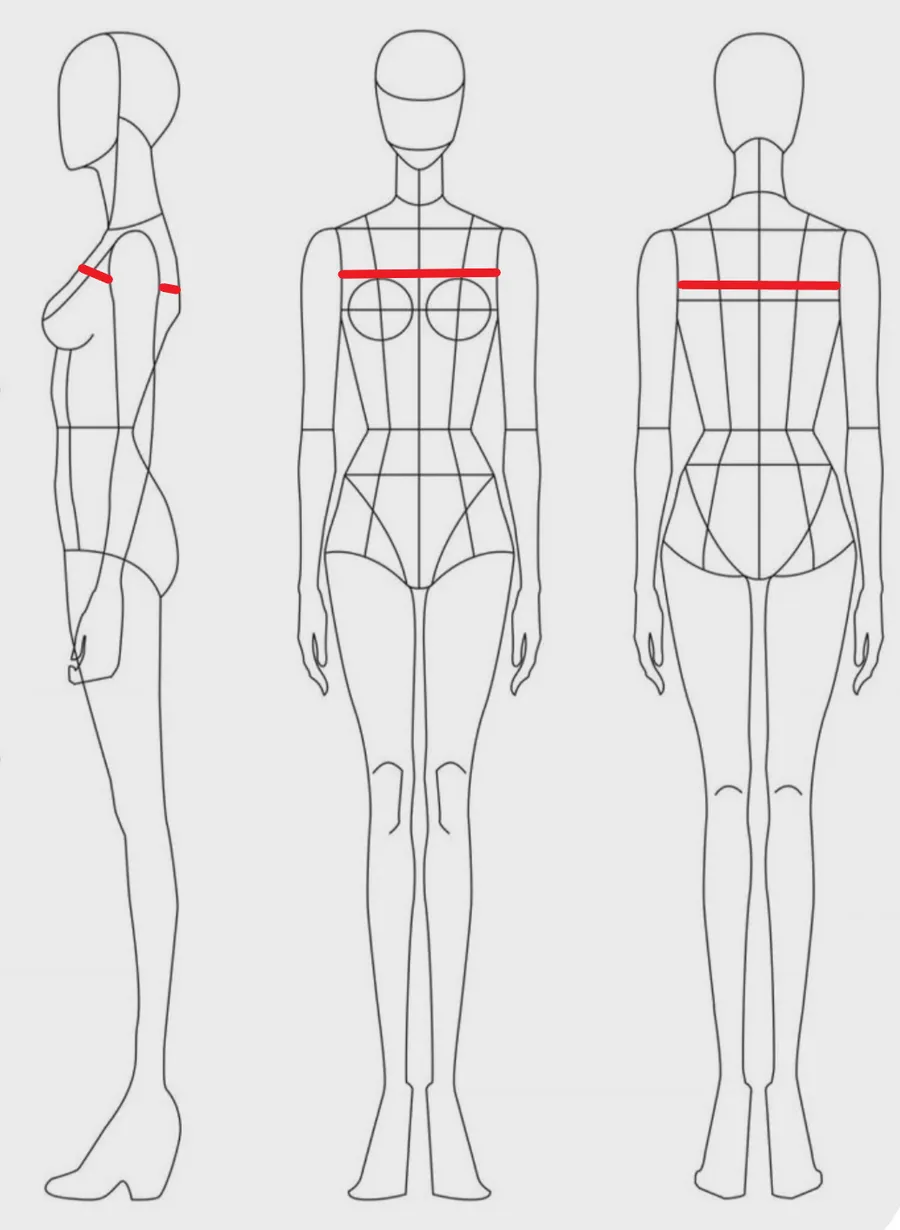
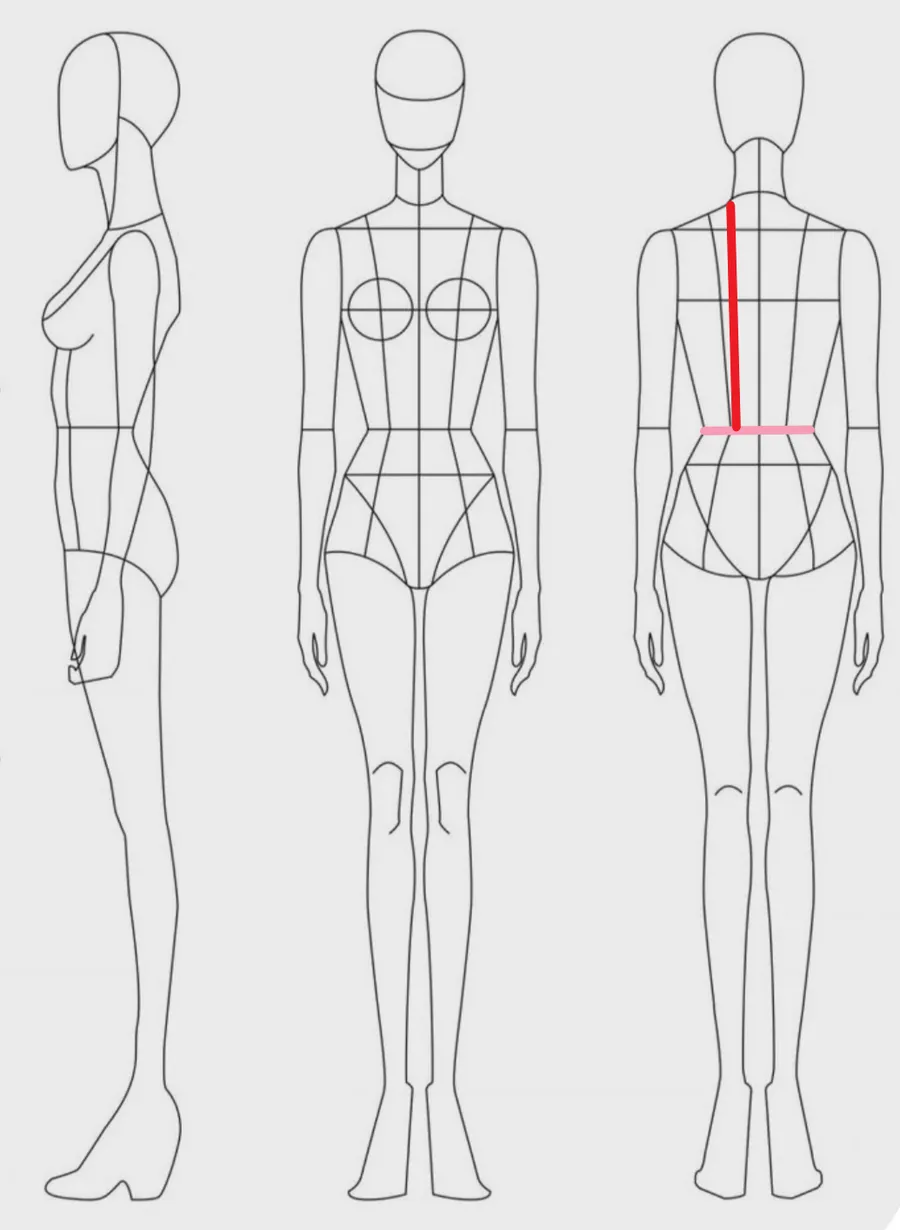
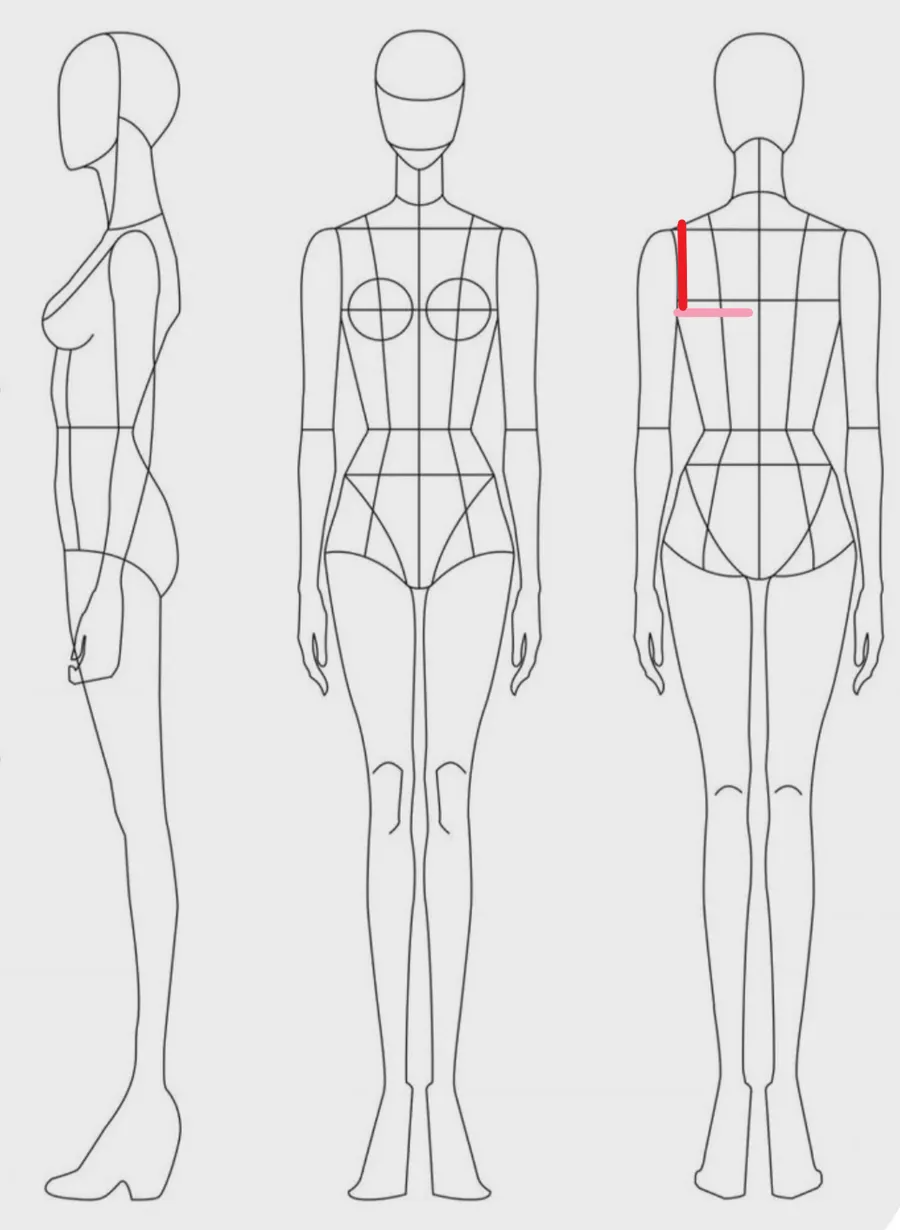
Every measurement has a diagram — no guessing where to place the tape. Browse all measurements →
Save your measurements
Store named sets and reload them any time. Try the built-in Sample Person, or pick a standard size XS–XL.
cm and inches
Switch units whenever you like, without re-entering values.
Output formats
A4 PDF
Tiled pages with assembly guide and print-check square. Print at home on any printer.
Plotter PDF
Single-roll format for wide-format printers. Professional, studio-grade output.
SVG
Scalable vector file for digital cutting machines and design software.
New accounts include 1 free pattern generation. No credit card required. Additional credits available when you need more.
Try a free pattern →