
Measurement guide
How to take every measurement, illustrated
A pattern is only as accurate as the measurements behind it. Below is every measurement the app can ask for — bodice, sleeve, and skirt — with a diagram and instructions for each one. Measure over close-fitting clothing, keep the tape snug but not tight, and use a helper where you can.
Is this based on a real tailoring method, or something custom?
Yes. The drafting engine is based on Единая методика конструирования одежды СЭВ (ЕМКО СЭВ), known in English as the EMKO CMEA method — a garment pattern-drafting system developed in the USSR between 1975 and 1985 by the Central Research Institute of the Garment Industry (CNIISHPI) for standardized mass-production clothing manufacturing across the Eastern Bloc. Tailor Base Patterns uses it as the base for bodice, sleeve, and skirt block (sloper) generation, which is why precise, accurate input measurements matter so much for the result. See the full history of the method.
How our pattern construction works
Most home-sewing pattern generators start from a small handful of measurements (bust, waist, hip) and scale a standard block to fit. Our drafting engine takes a more detailed path:
- Extended bust measurement set. Instead of one bust circumference, the method uses four separate bust-level measurements — taken through the armpits, through the bust points, at bust height, and at the under-bust — so the draft accounts for bust projection and shape, not just overall girth.
- Automatic posture correction. Before drafting begins, the method compares your front and back waist lengths and classifies your posture (upright, forward-rounded, or erect/arched), then shifts the neckline and center-back/front lines to compensate — a correction most basic block methods skip entirely.
- Level-based construction geometry. The pattern is built level by level — chest, waist, hip — with the back, side, and front sections constructed in relation to each other at every level, keeping the whole block internally consistent rather than drafting each panel independently.
- Proportional ease distribution. Fabric ease at the waist isn't dumped into a single dart — it's split proportionally across the back-center seam, back side dart, side seam, and front dart, producing a more balanced, wearable shape.
- Low-bust and hip corrections. Additional automatic corrections re-balance the armhole when the bust point sits low, and cut-and-spread the hip line when the drafted hip width doesn't match your actual hip measurement — refinements that are typically manual, fitting-stage adjustments in other methods.
The result is a first-draft block tailored to your actual body shape and posture — not a generic size adjusted after the fact.
Bodice & sleeve
Circumferences
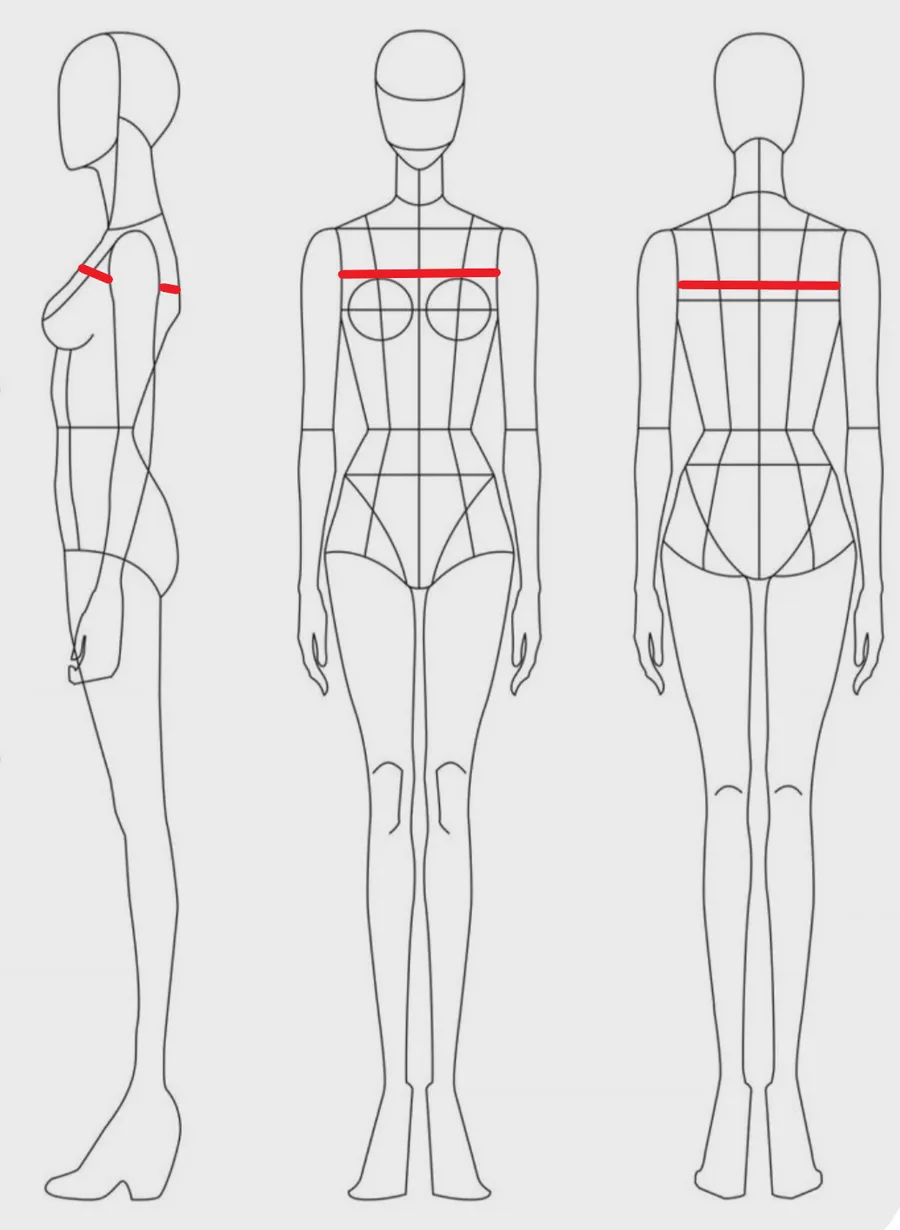
Upper bust
Wrap the tape measure around your torso, nesting it high up under your armpits, straight across your back/shoulder blades, and sloping slightly up above the fullest part of your breasts in the front (pull the tape measure tight). Why it matters: This measures your actual skeletal frame size. Always choose your base pattern size by your high bust measurement — the neckline, shoulders, and armholes will fit beautifully without gaping.
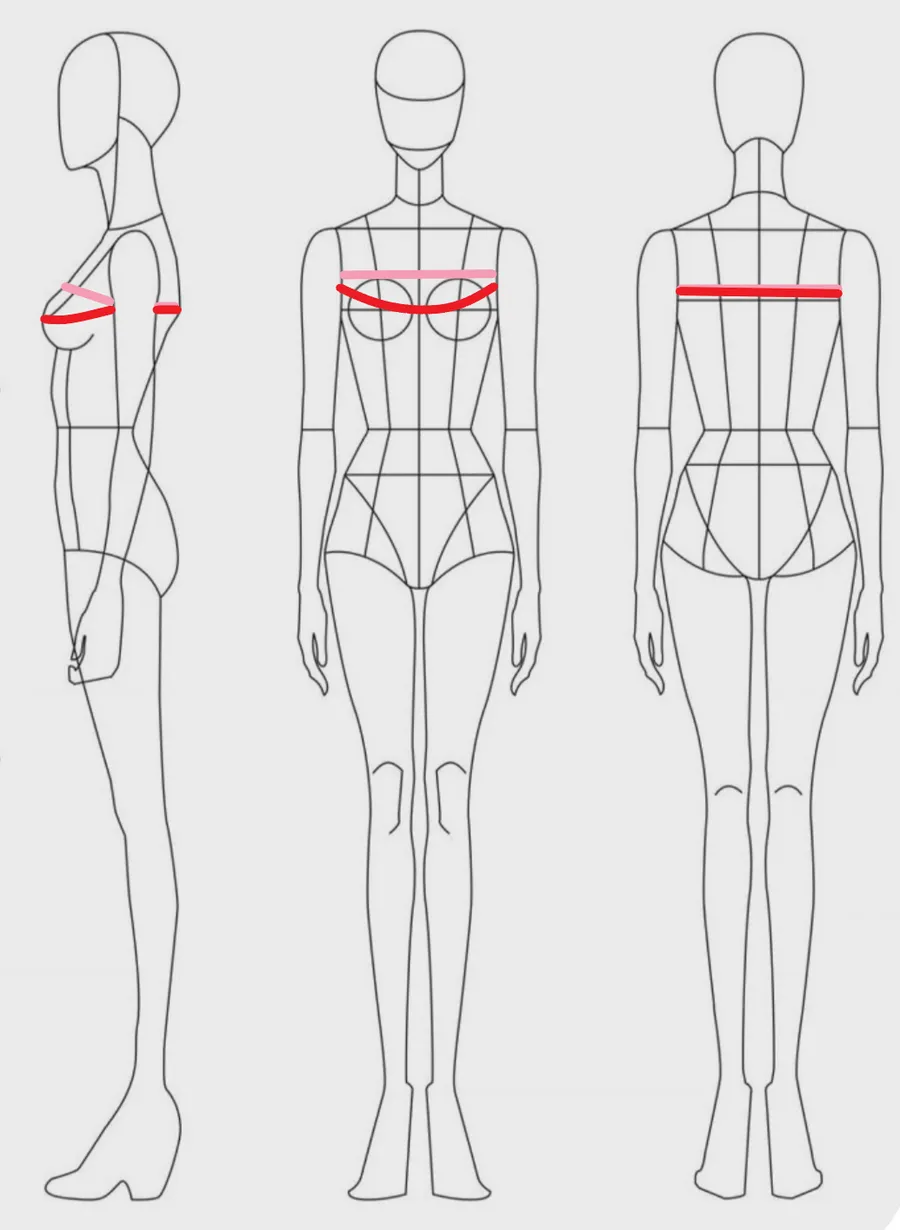
Second bust circumference
Wrap the tape from high under your armpits, straight across your back, then slope the tape slightly over the fullest part of your breasts in the front (unlike the Upper bust, where the tape sits above the fullest point). This differs from the Full bust, where the tape is perfectly parallel to the floor.
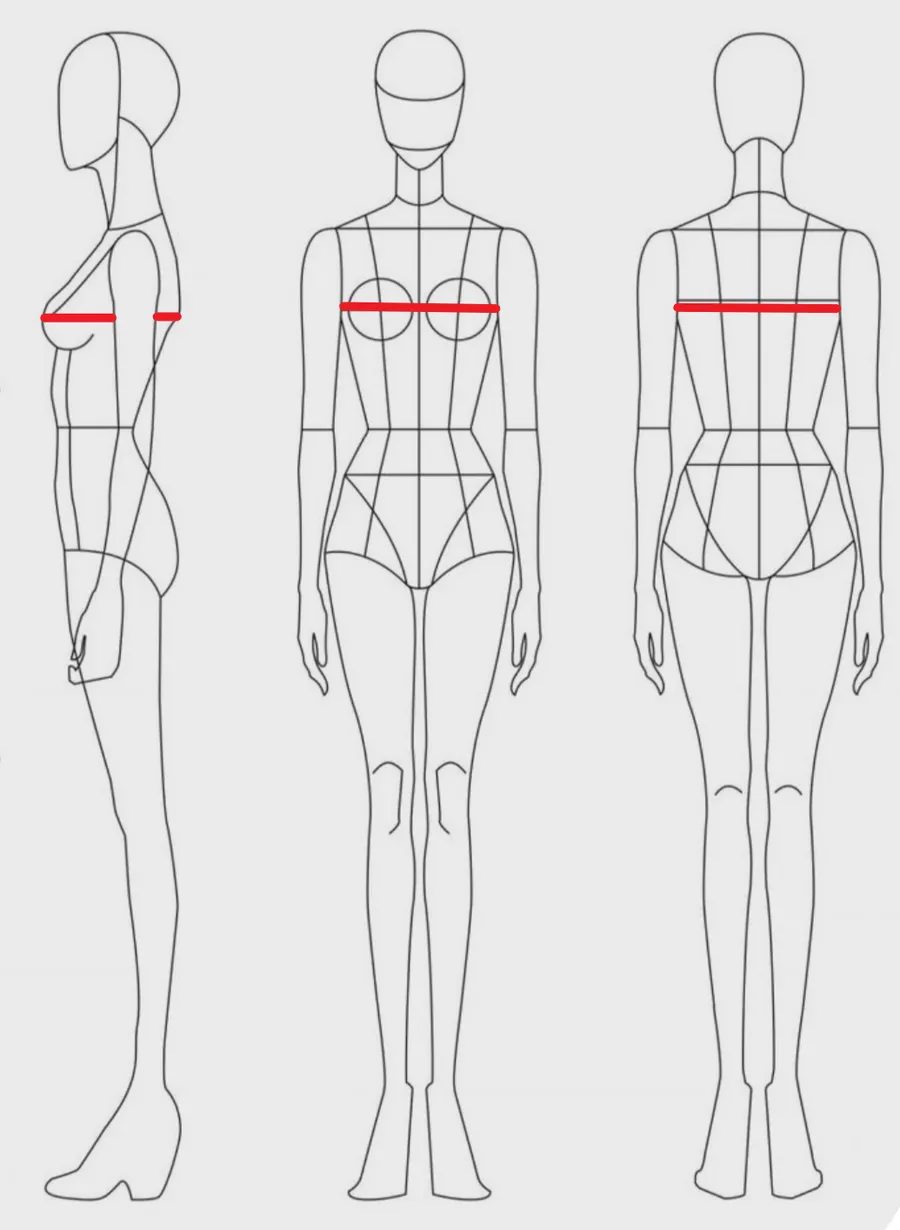
Full bust
Measured around the body through the bust points, parallel to the floor.
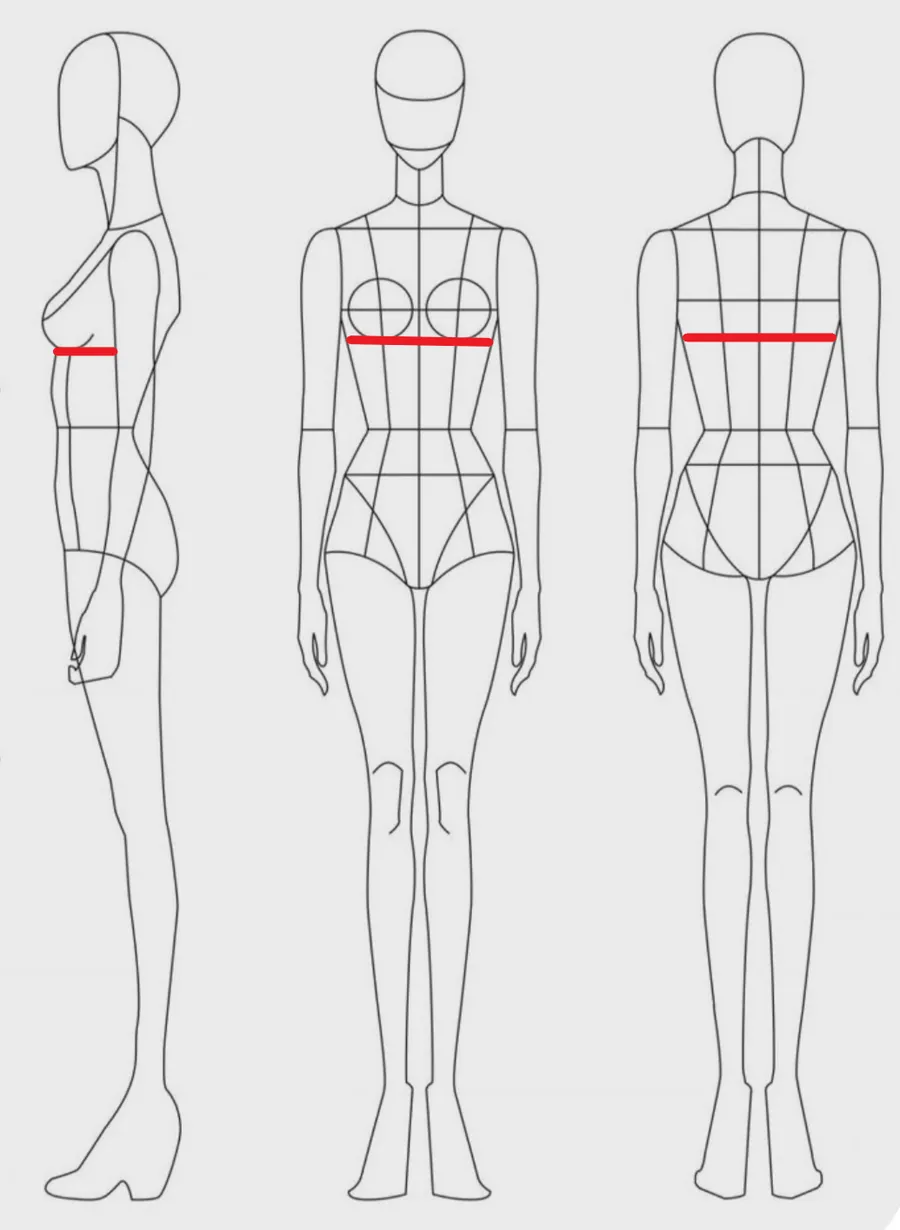
Under-bust
Measured around the body at the base of the bust (under-bust).
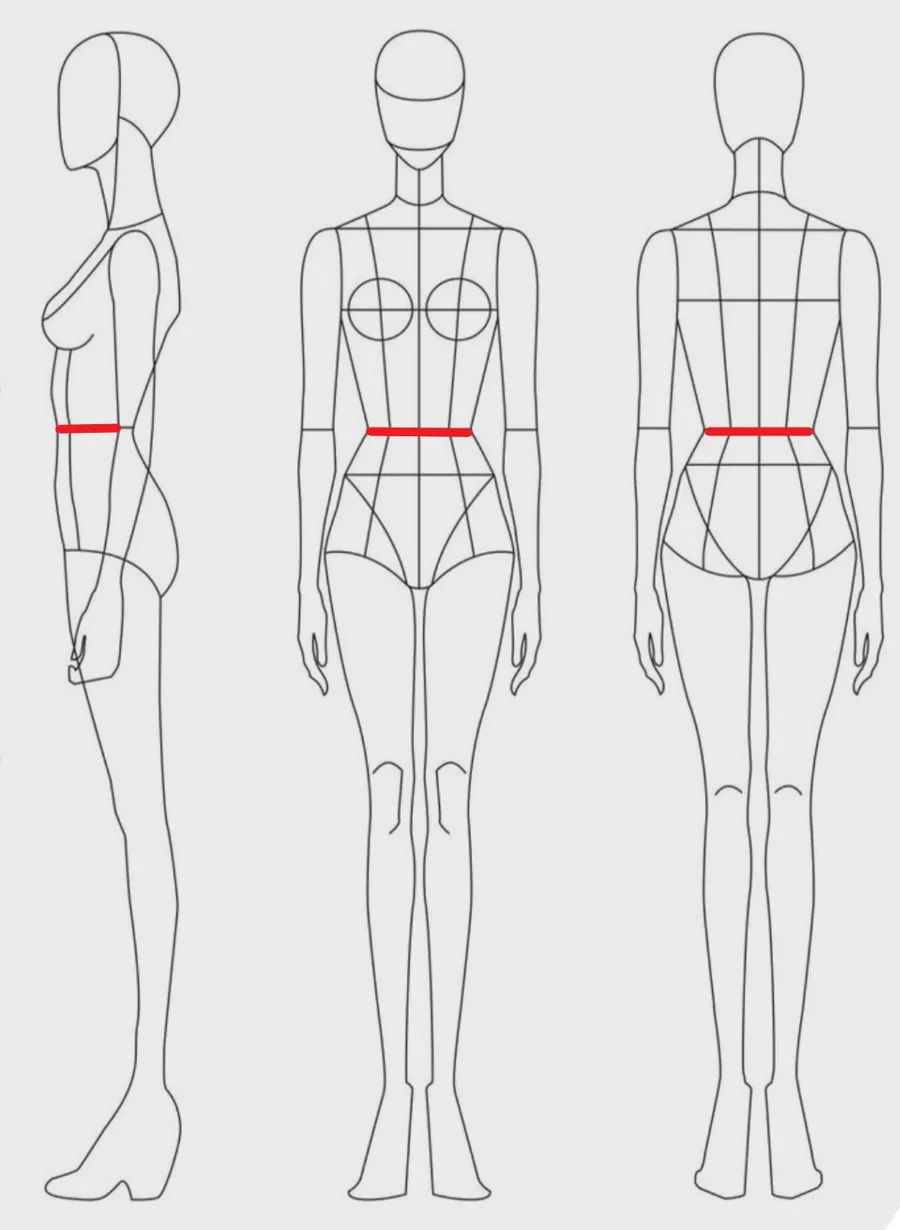
Waist circumference
Measured around the rubber band tied at the waist, loosely; if there are skin folds above or below the band, include their protrusion in the measurement.
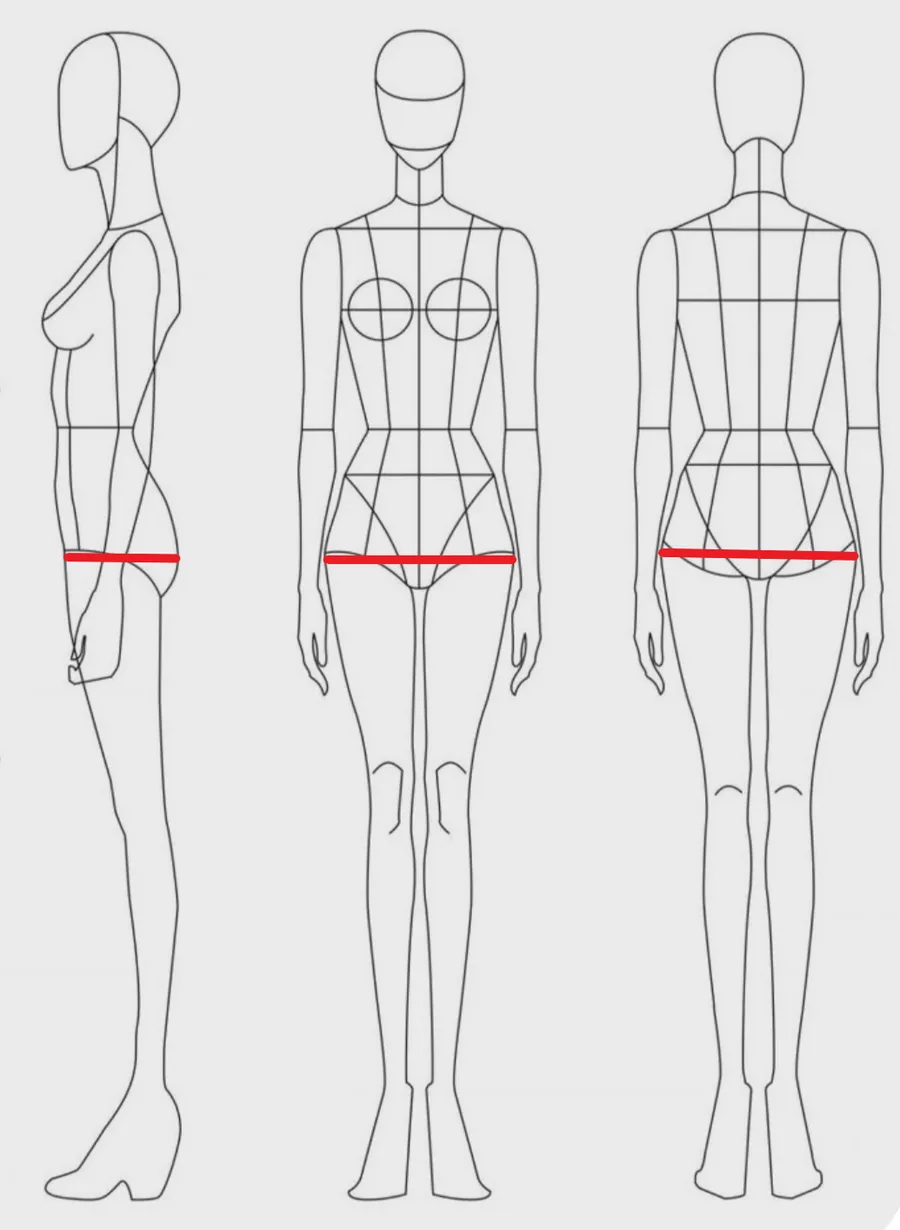
Hip circumference
Measured around the body in the hip area, at the widest point.
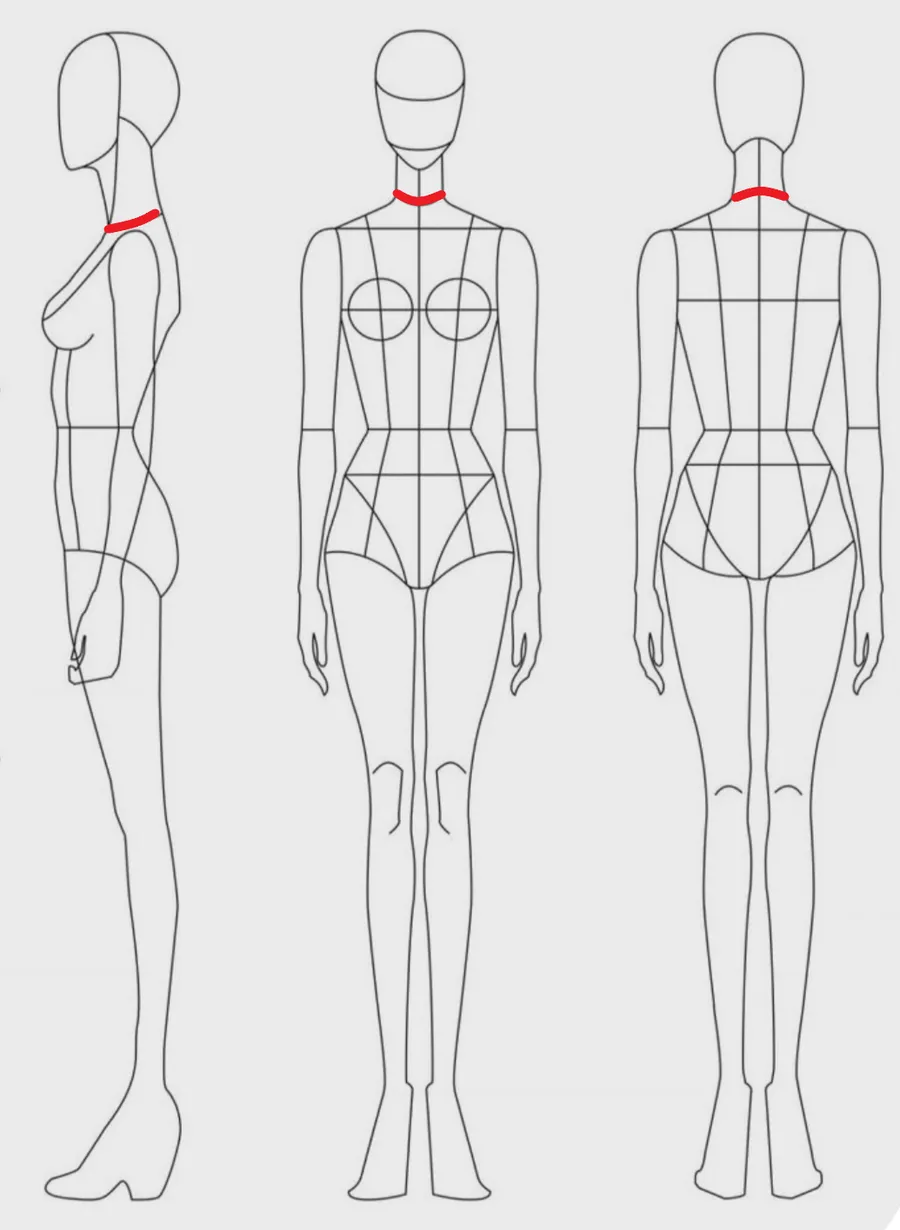
Neck circumference
Measured around the base of the neck, like a tight stand-up collar.
Widths & Distances
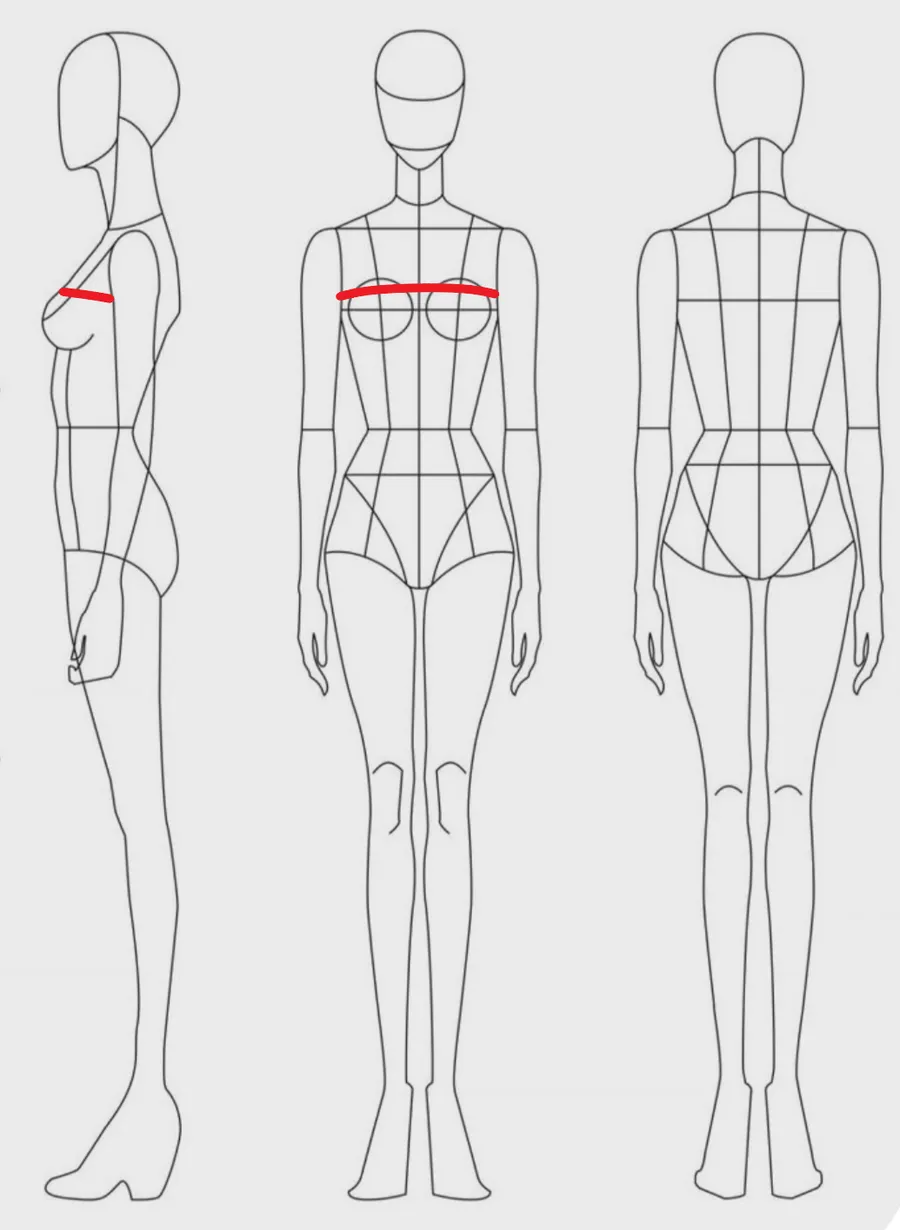
Bust width
Measured as the distance between one armpit fold (imaginary armhole) to the other, above the bust.
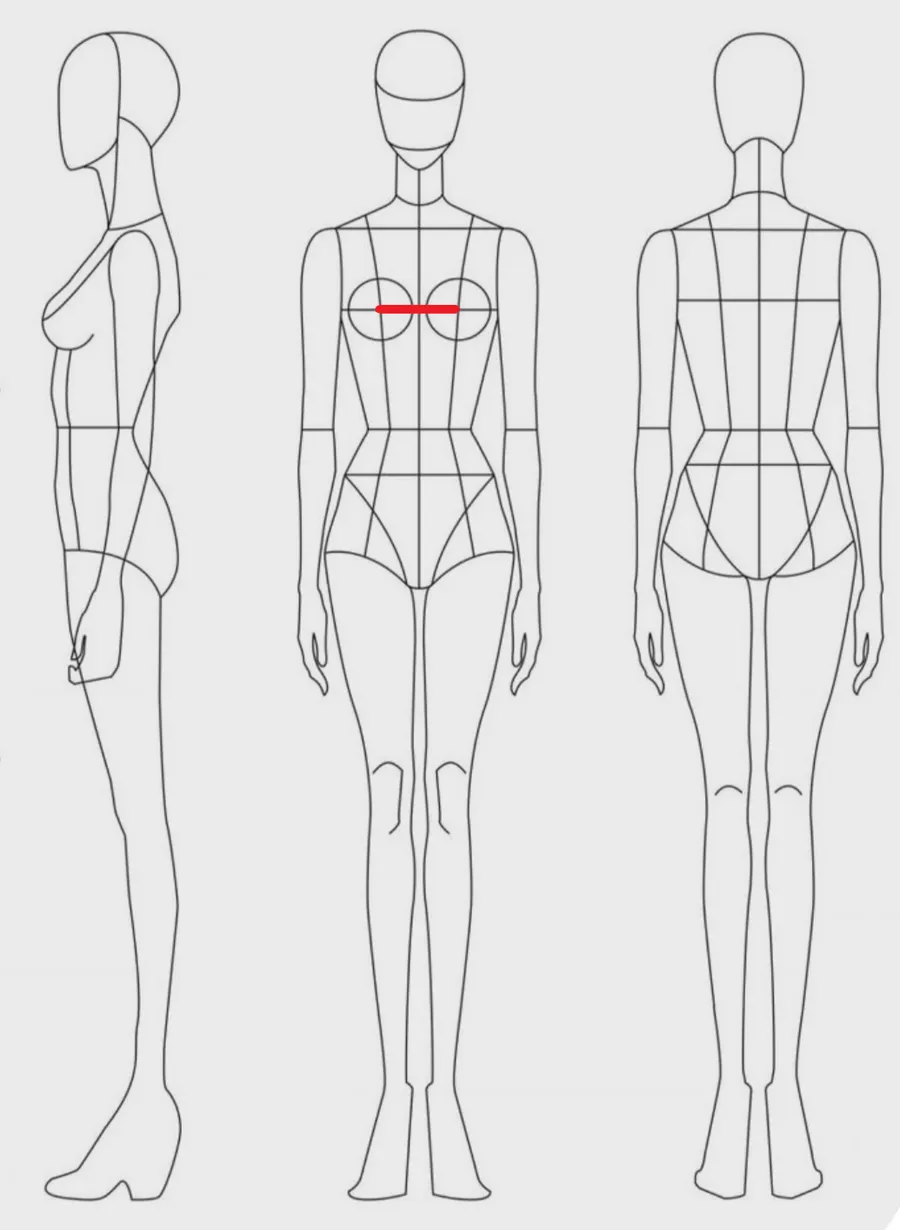
Bust span
Measured as the distance between the bust points; secure the tape (with a pin) to the bra.
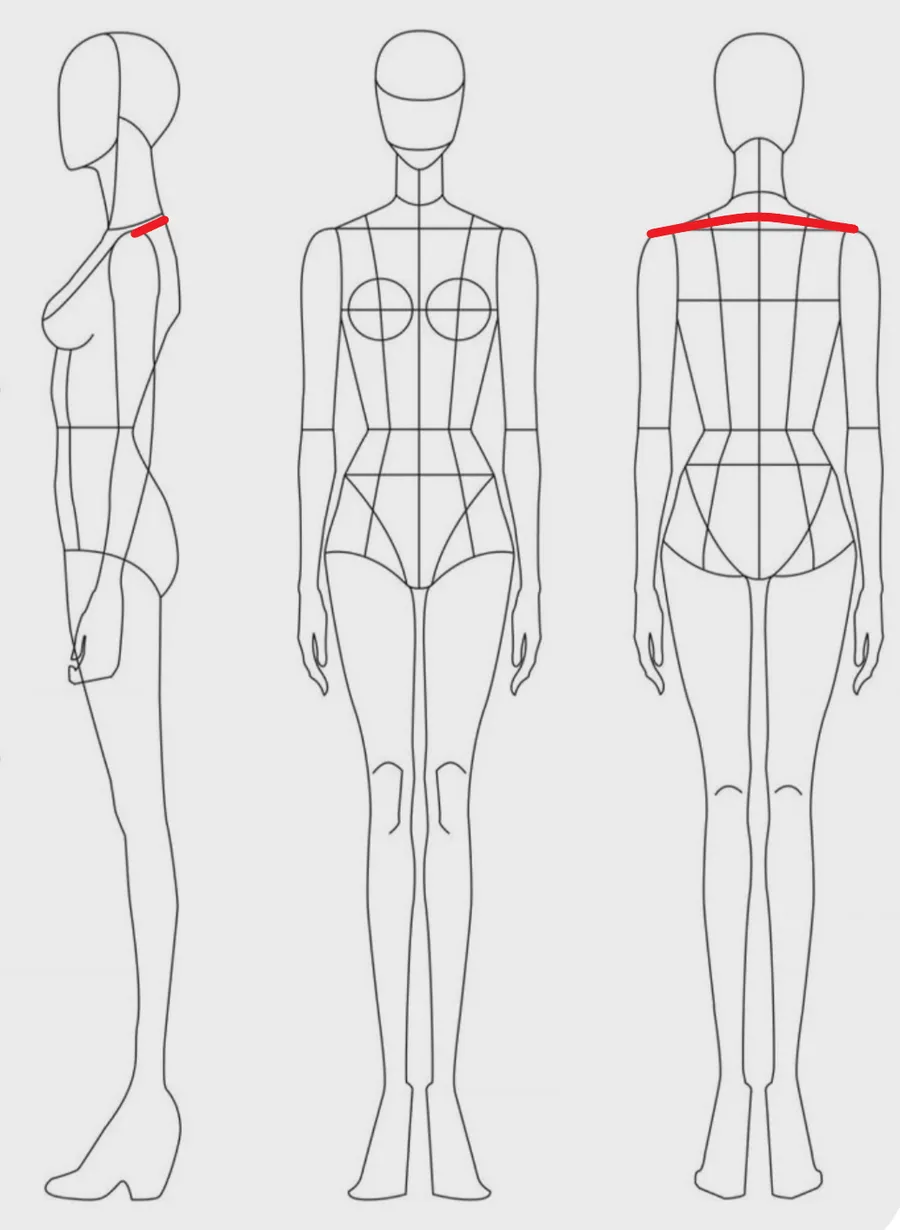
Shoulder width
Measured from one shoulder tip, across the neck, to the other shoulder tip.
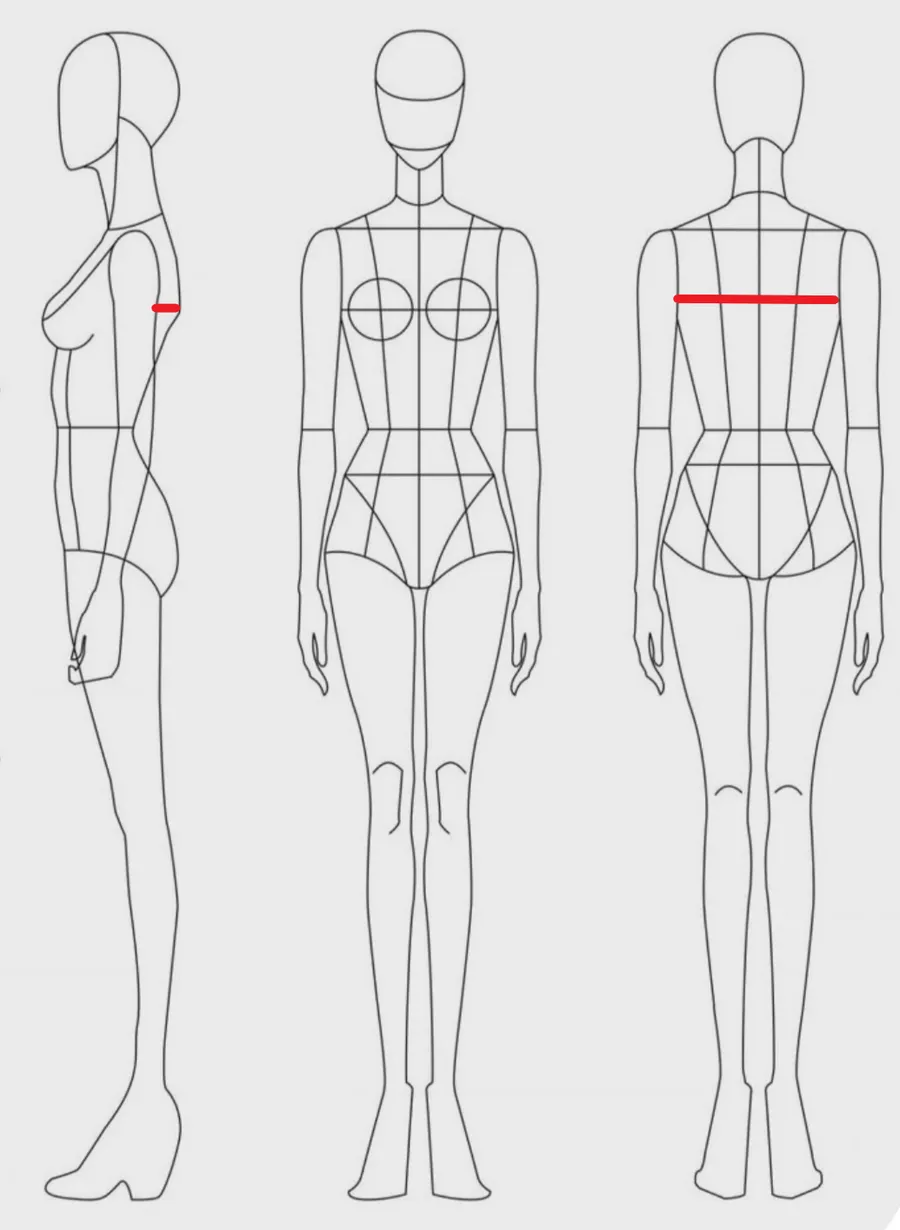
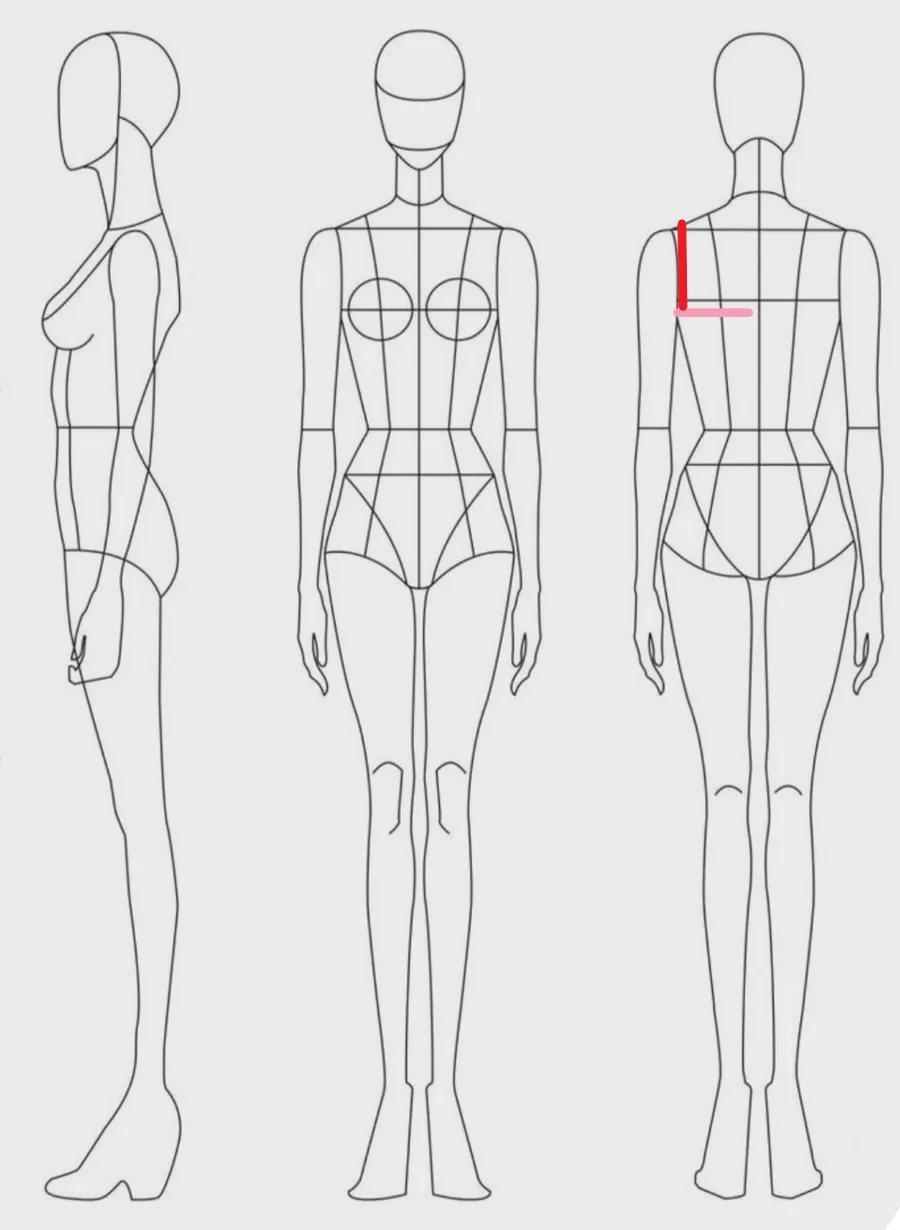
Back width
Measured from the top of one armpit fold (imaginary armhole) across the shoulder blades to the top of the other armpit fold.
Lengths
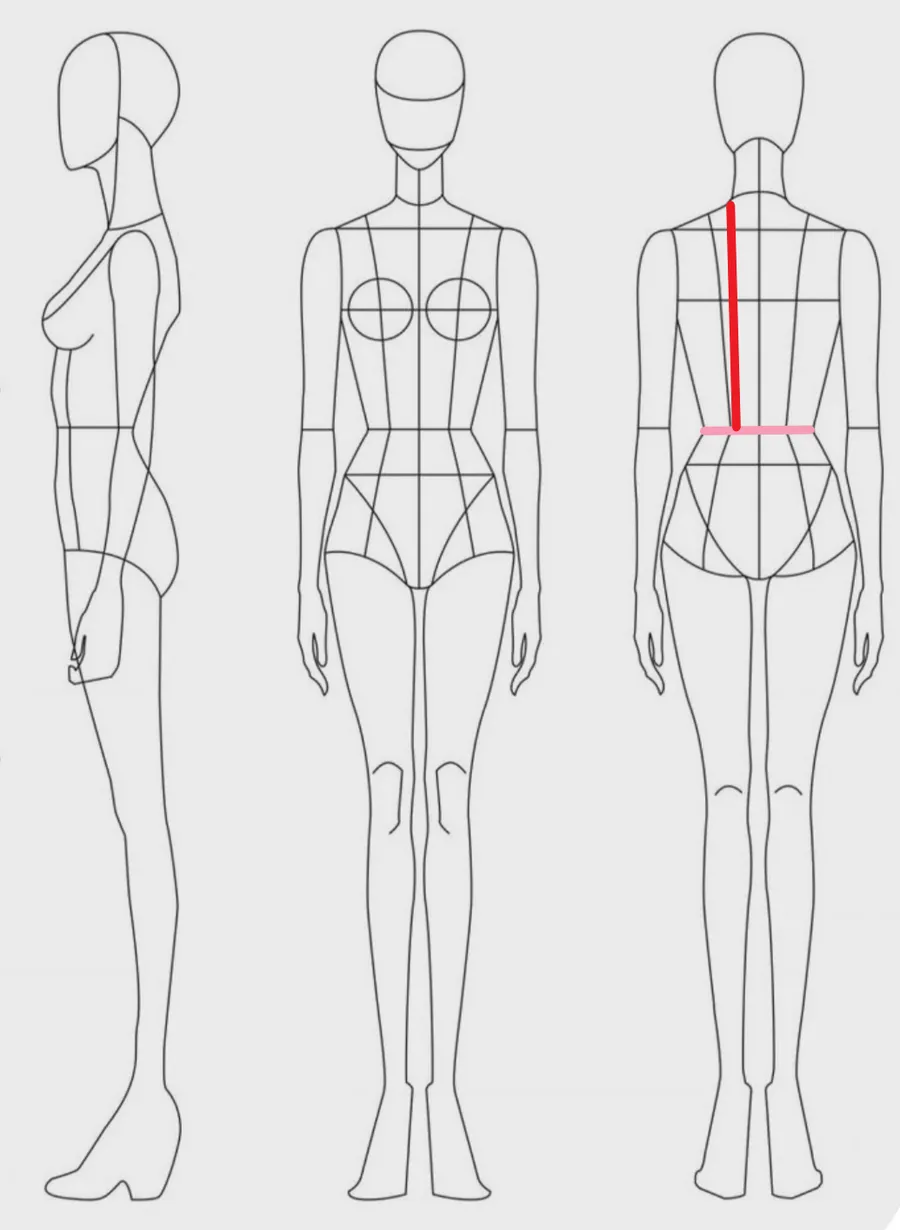
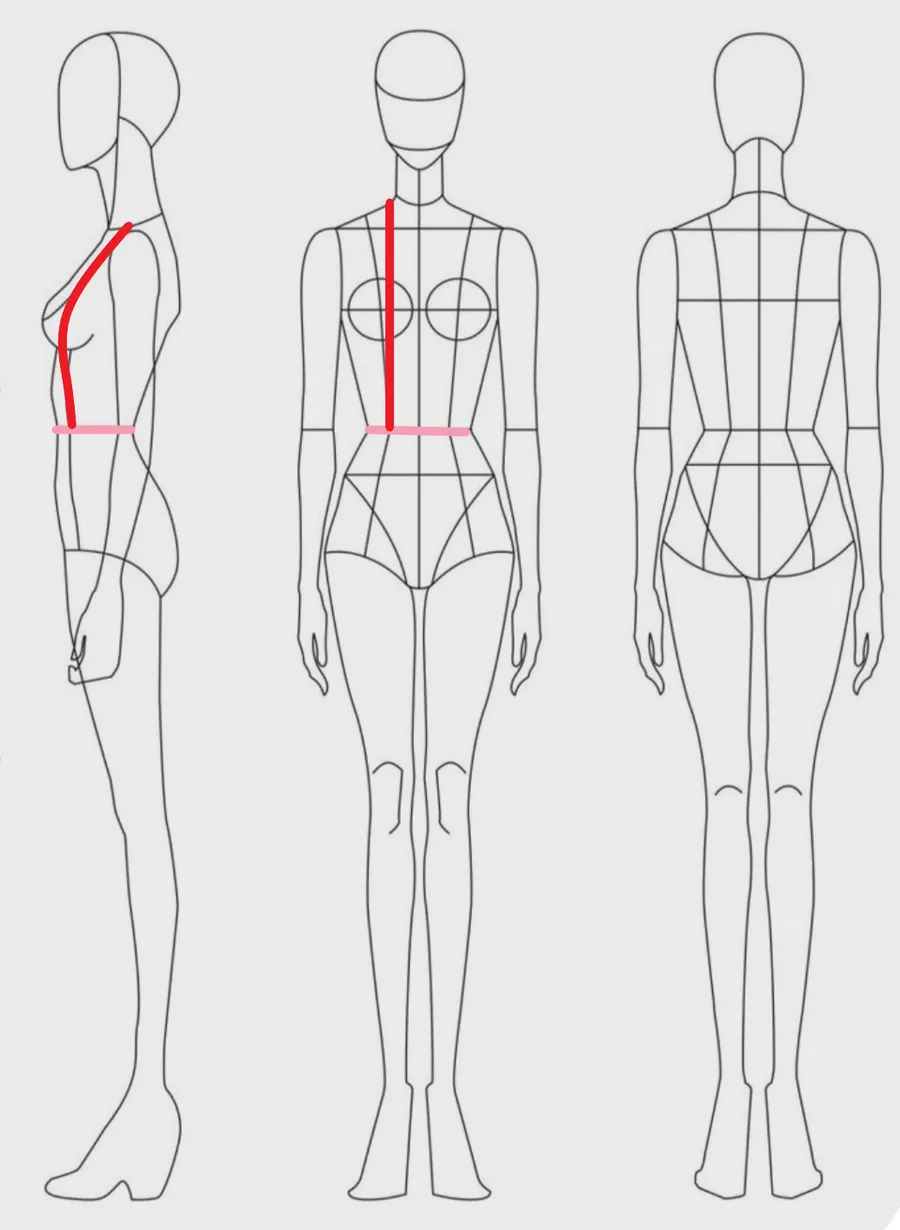
Back length to waist
Measured using the shoulder harness from the side neck point to the bottom edge of the waist band at the back.
Front length to waist
Measured using the shoulder harness from the side neck point to the bottom edge of the waist band.
Armhole depth
Measured with the slightly bent (not straight!) arm. Place a tape or soft ruler in the armpit at the back, parallel to the floor; read the distance on the shoulder harness from the side neck point to the armpit ruler.
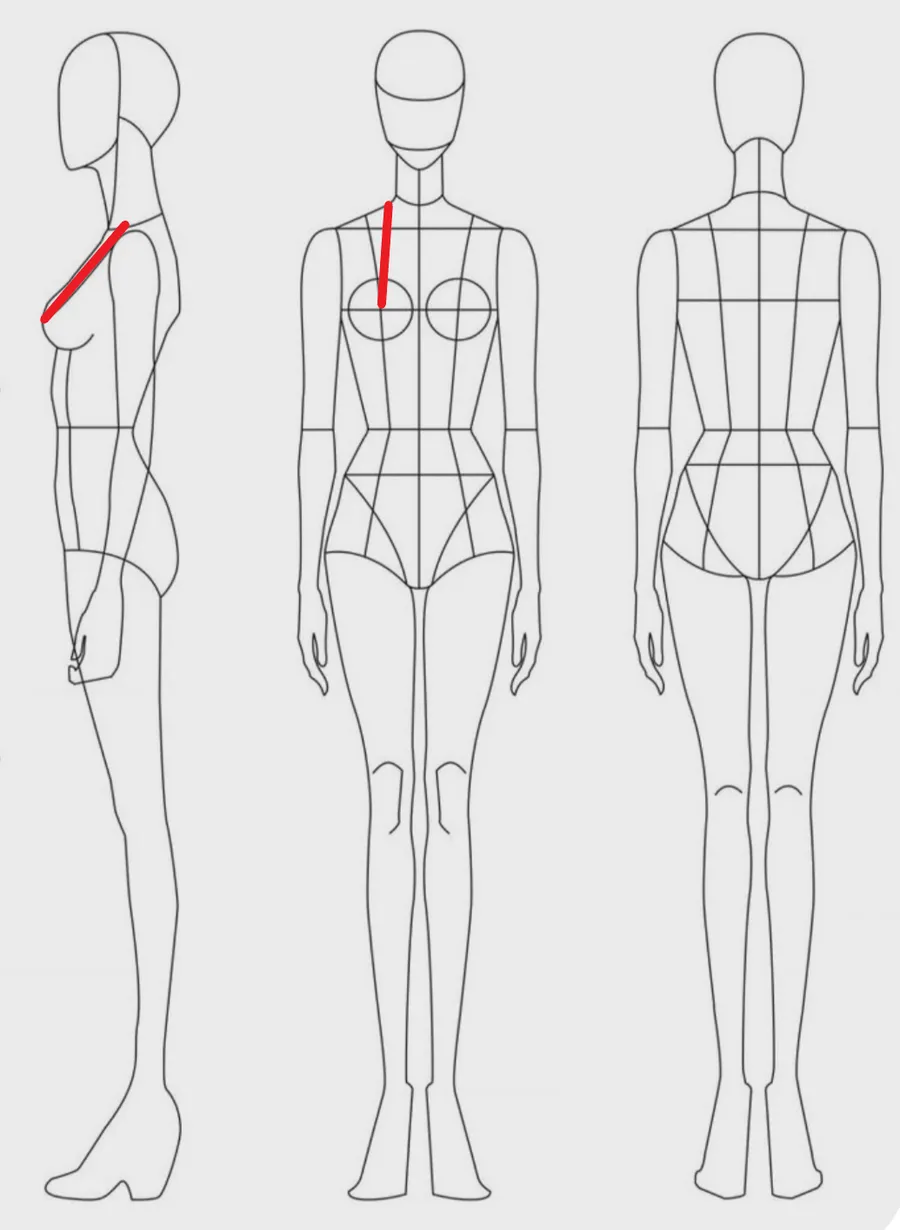
Bust depth
Measured along the shoulder harness from the side neck point to a pin placed at the bust point.
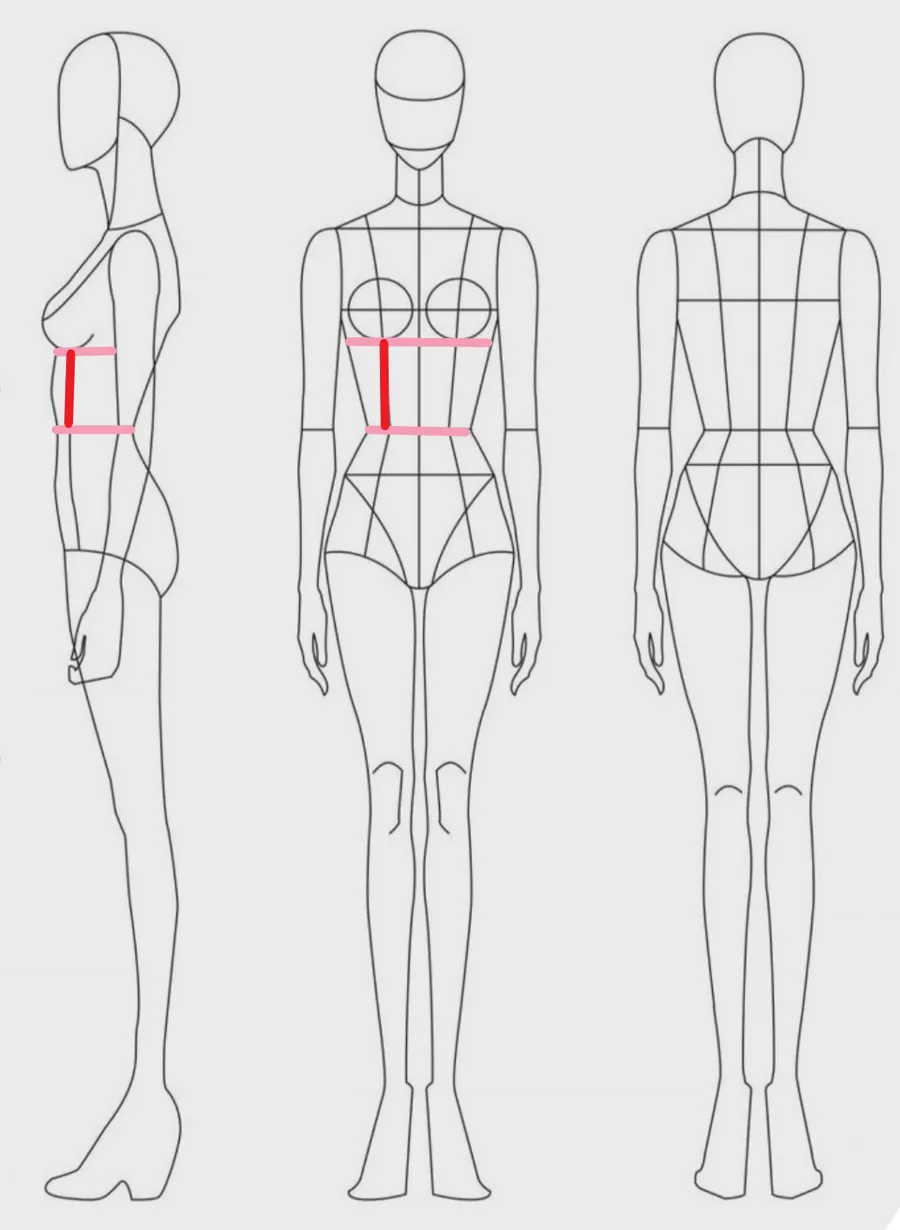
Bust base height
Measured as the distance from the bottom edge of the waist band to the base of the bust (or the bottom edge of the bra underwire).
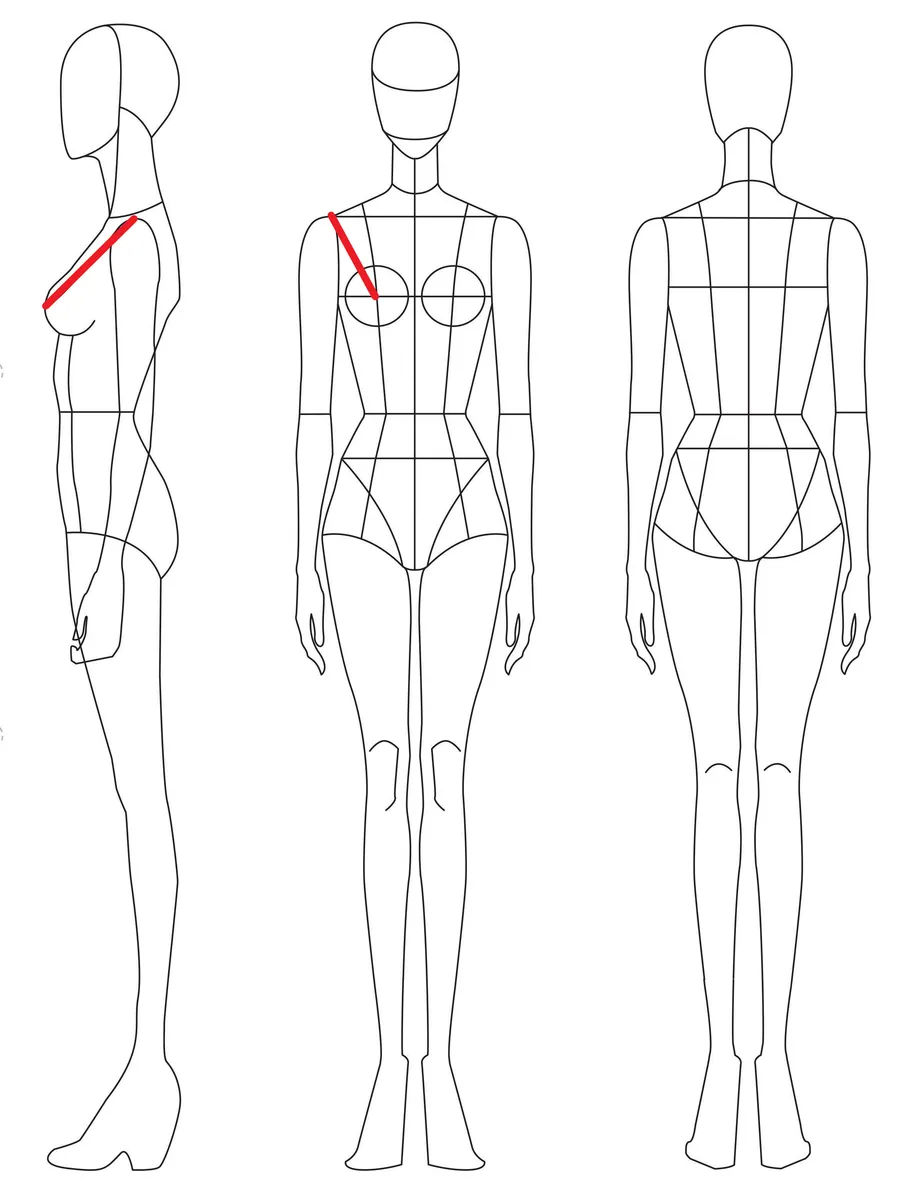
Front shoulder slope
Measure diagonally from the shoulder point to the bust apex.
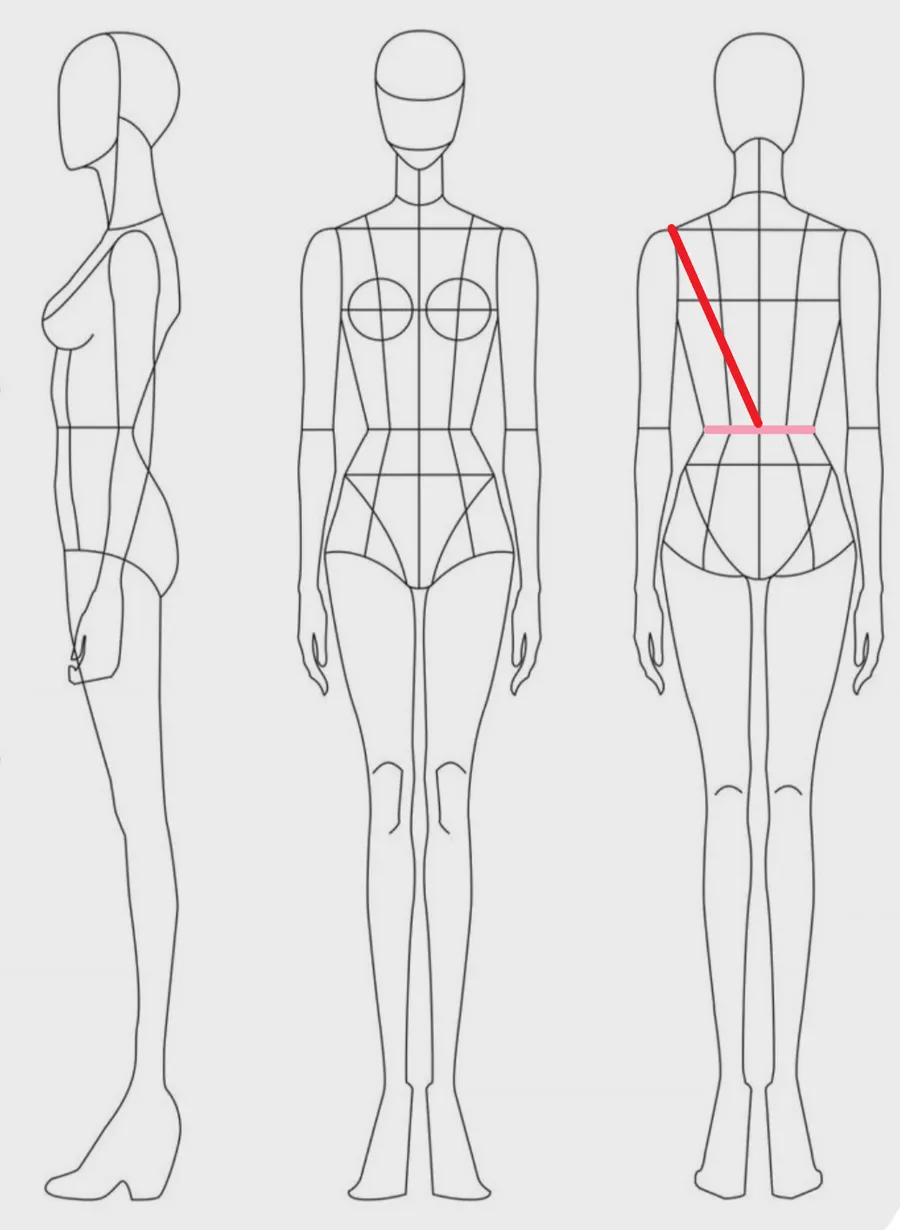
Back slanting length
Measured from the shoulder tip (the same point as for the front) diagonally across the back to the intersection of the waist band's bottom edge and the spine.
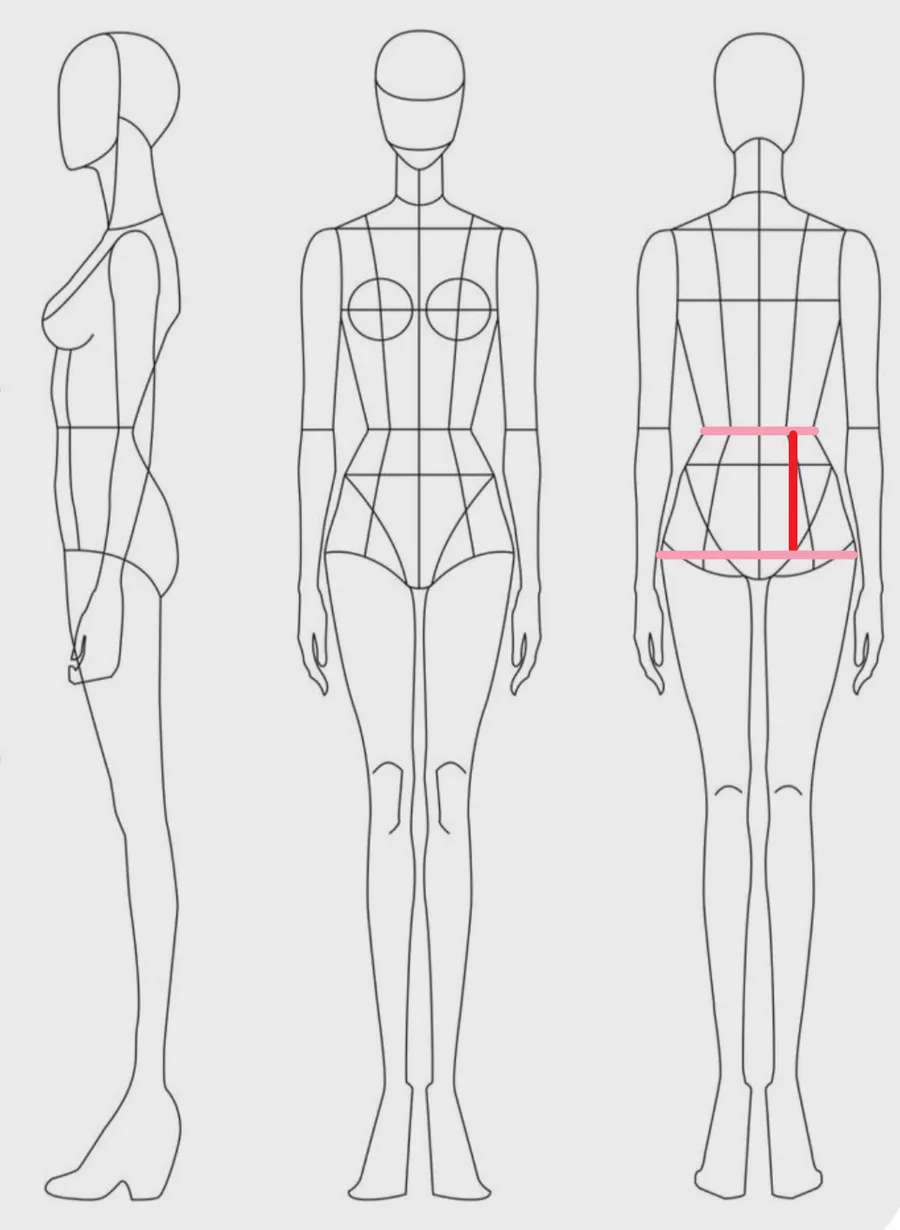
Hip height
Vertical distance measured from the waistline (waistband) down to the widest part of the hips.
Sleeve
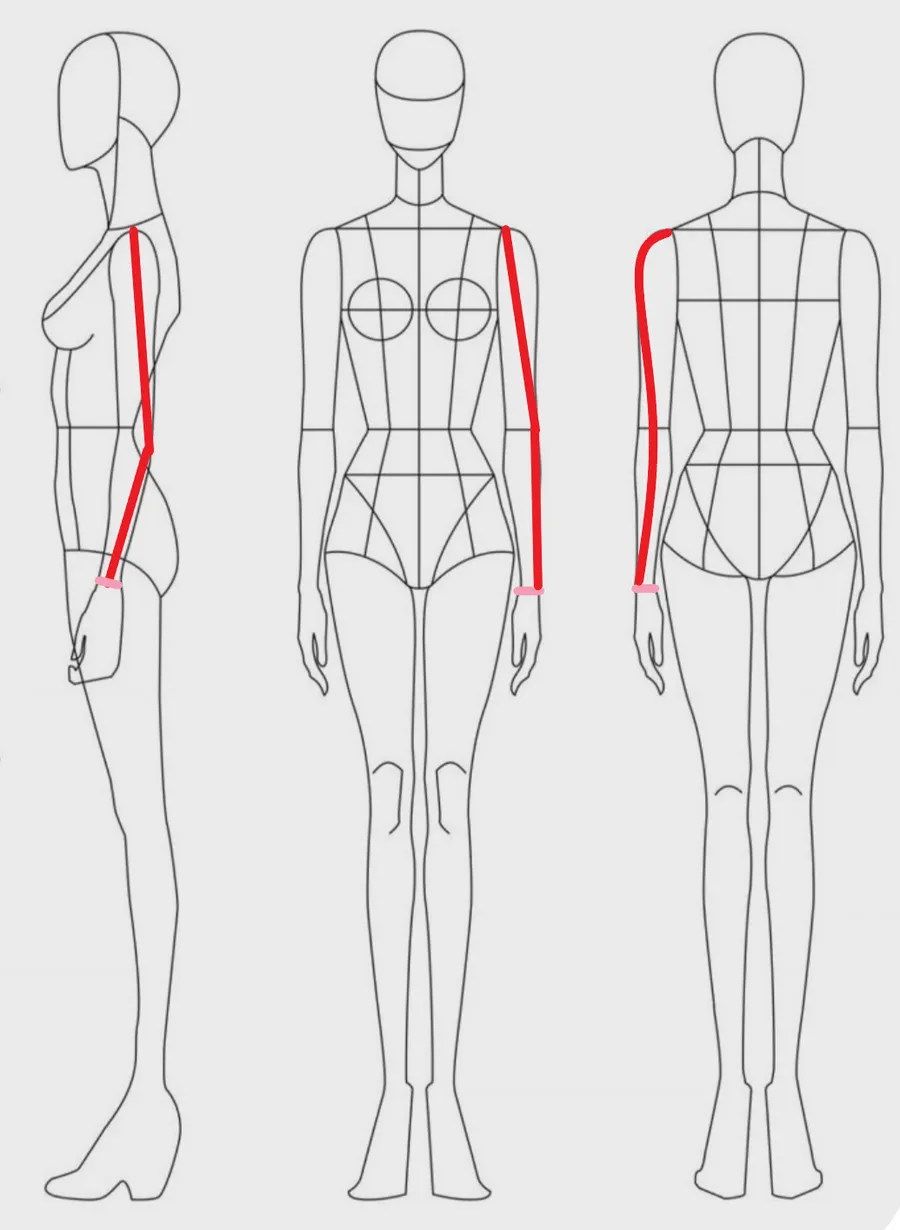
Arm length
Measured on a semi-bent arm, from the shoulder tip, through the elbow to the wrist joint below the bone.
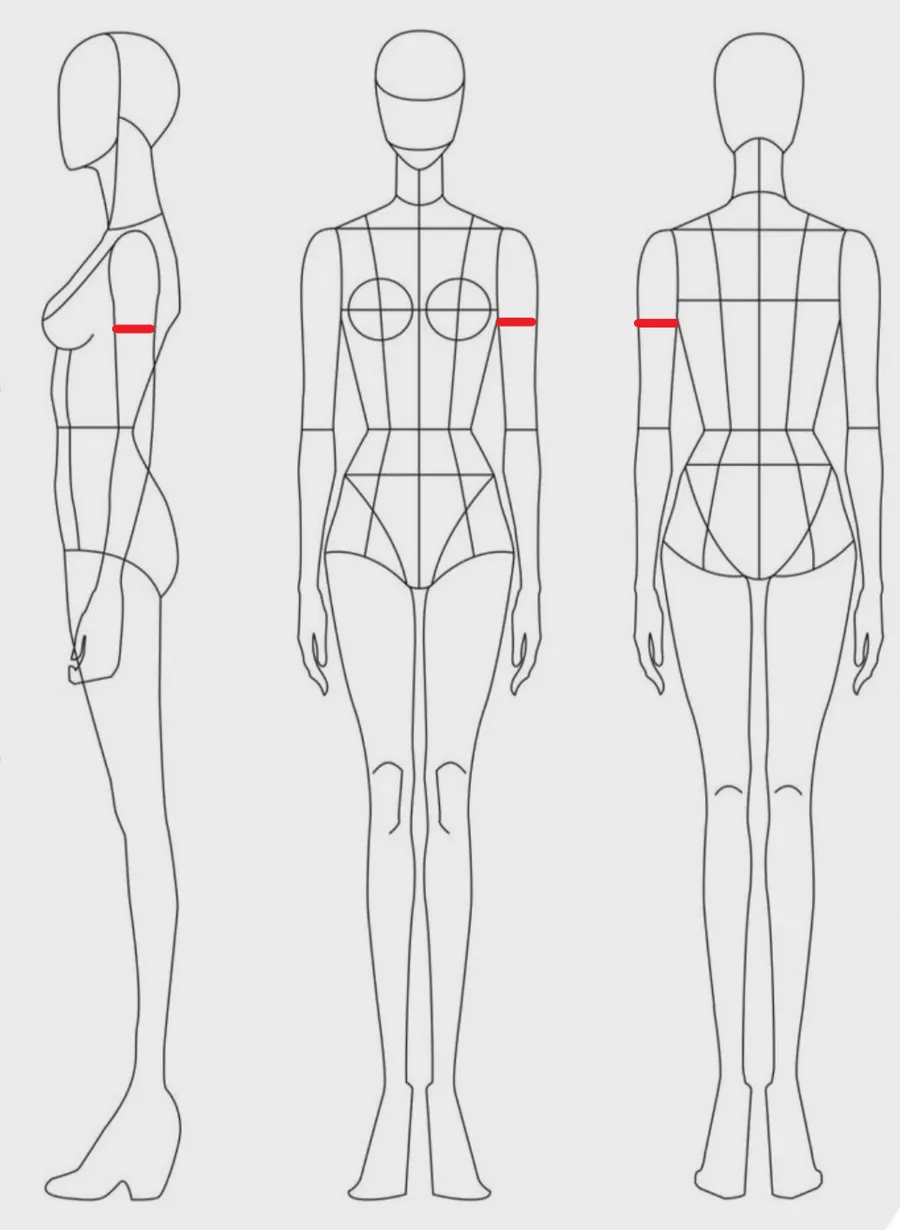
Upper arm circumference
Measured around the arm at the armpit, recording the widest point.
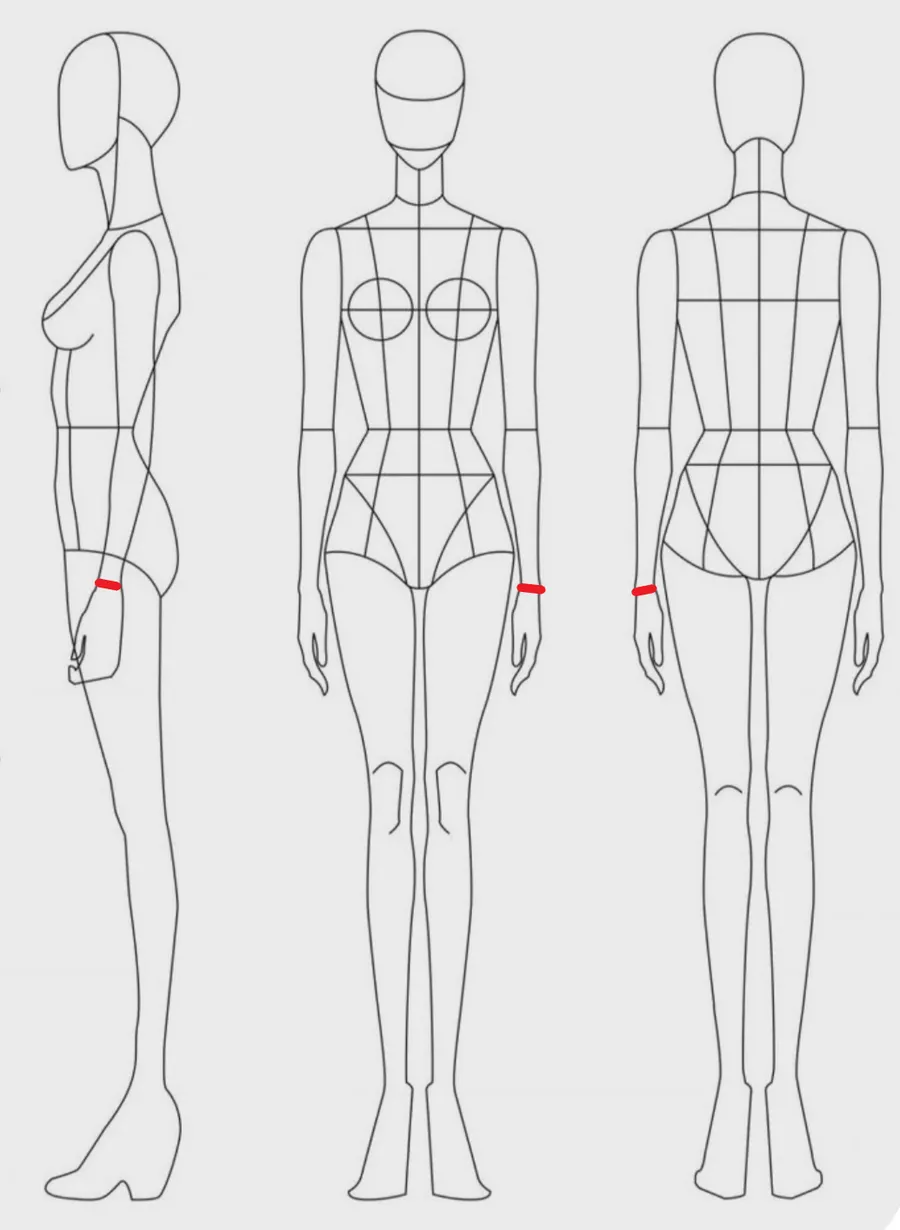
Wrist circumference
Measured around the wrist bones.
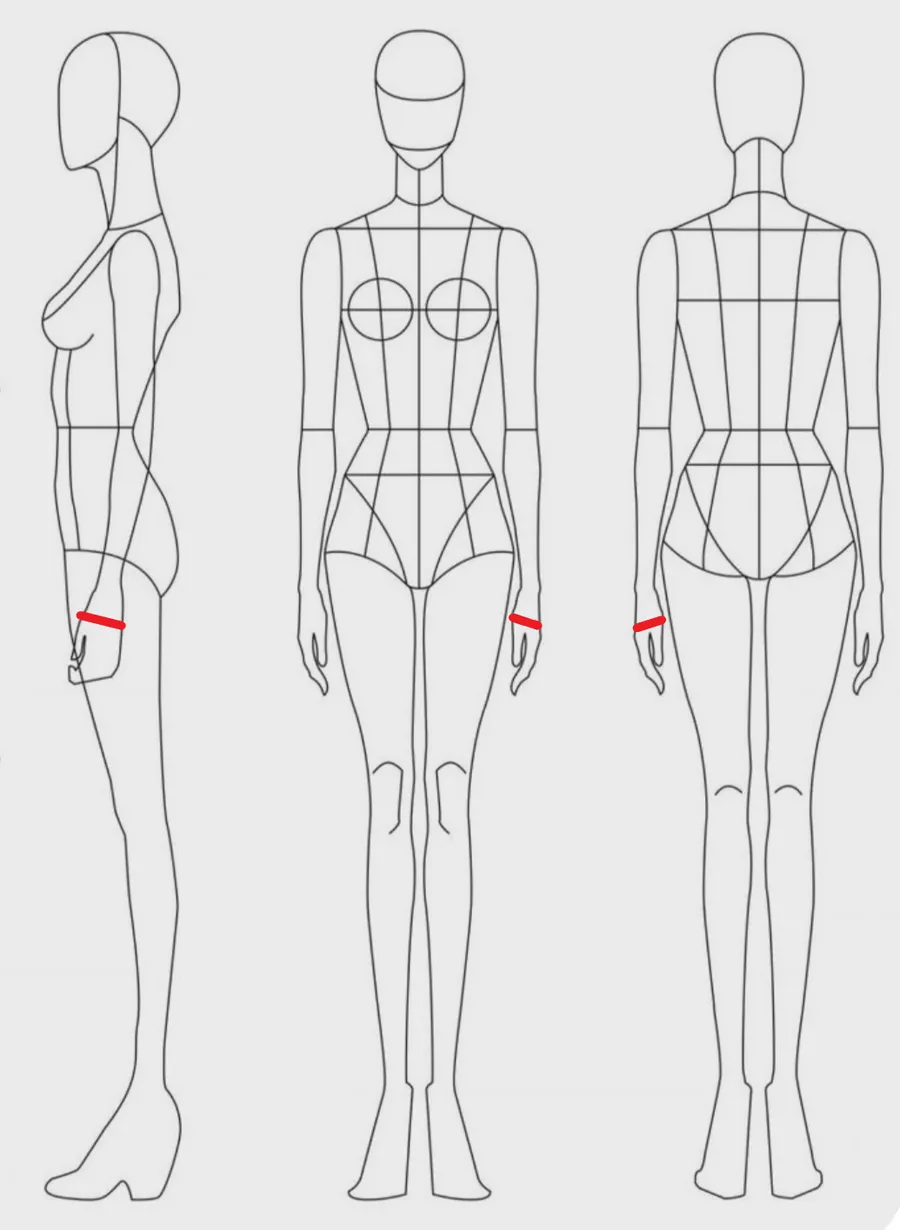
Hand circumference
Measured around a tucked/closed hand across the finger knuckles.
Skirt
Measurements
Waist circumference
Measured around the rubber band tied at the waist, loosely; if there are skin folds above or below the band, include their protrusion in the measurement.
Hip circumference
Measured around the body in the hip area, at the widest point.
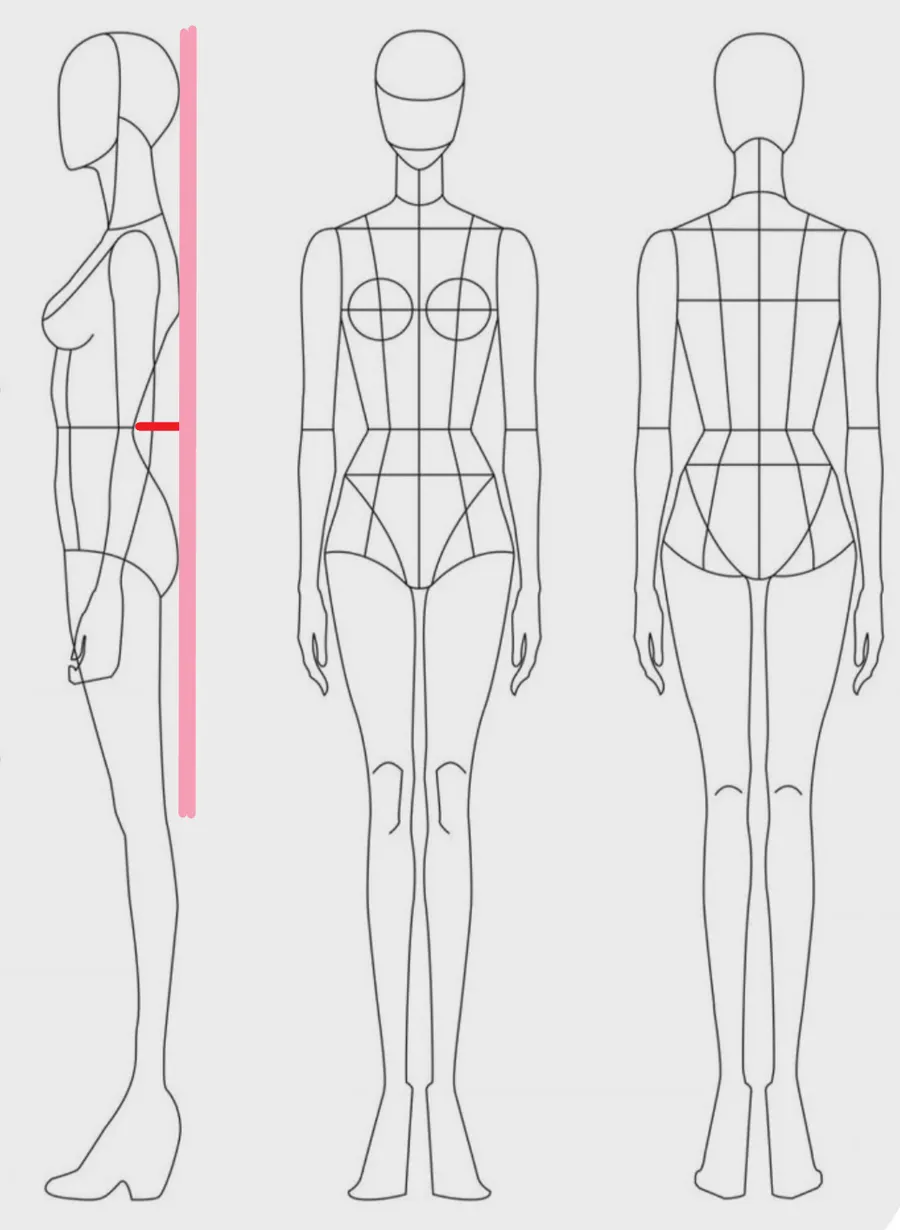
Back prominence depth
Measured from a vertical plane (e.g. a wall or ruler) placed against the most prominent point of the buttocks to the elastic band at the center back waist. Used for precise pattern drafting / swayback adjustment.
Hip height
Vertical distance measured from the waistline (waistband) down to the widest part of the hips.
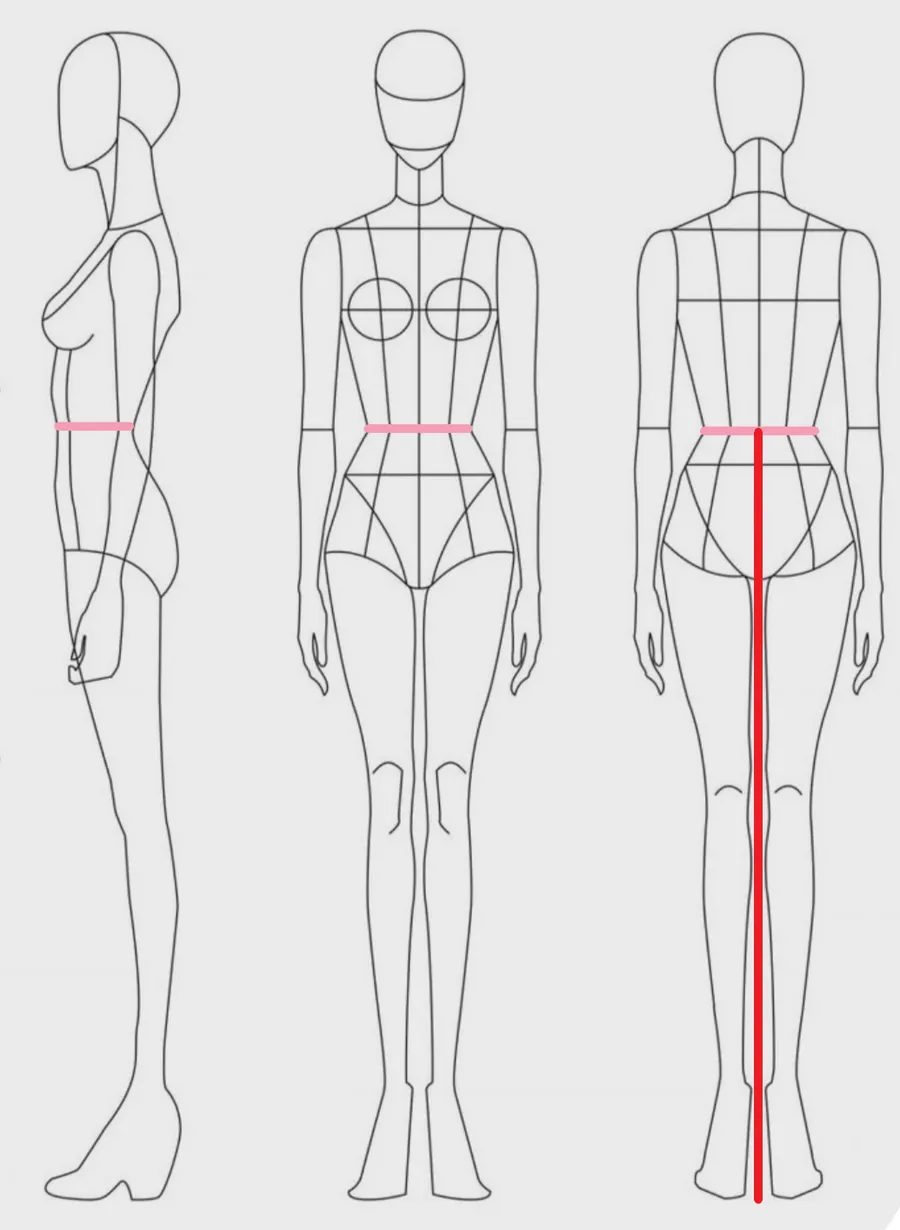
Back waist height
Measured from the elastic band around the waist down to the floor along the center back.
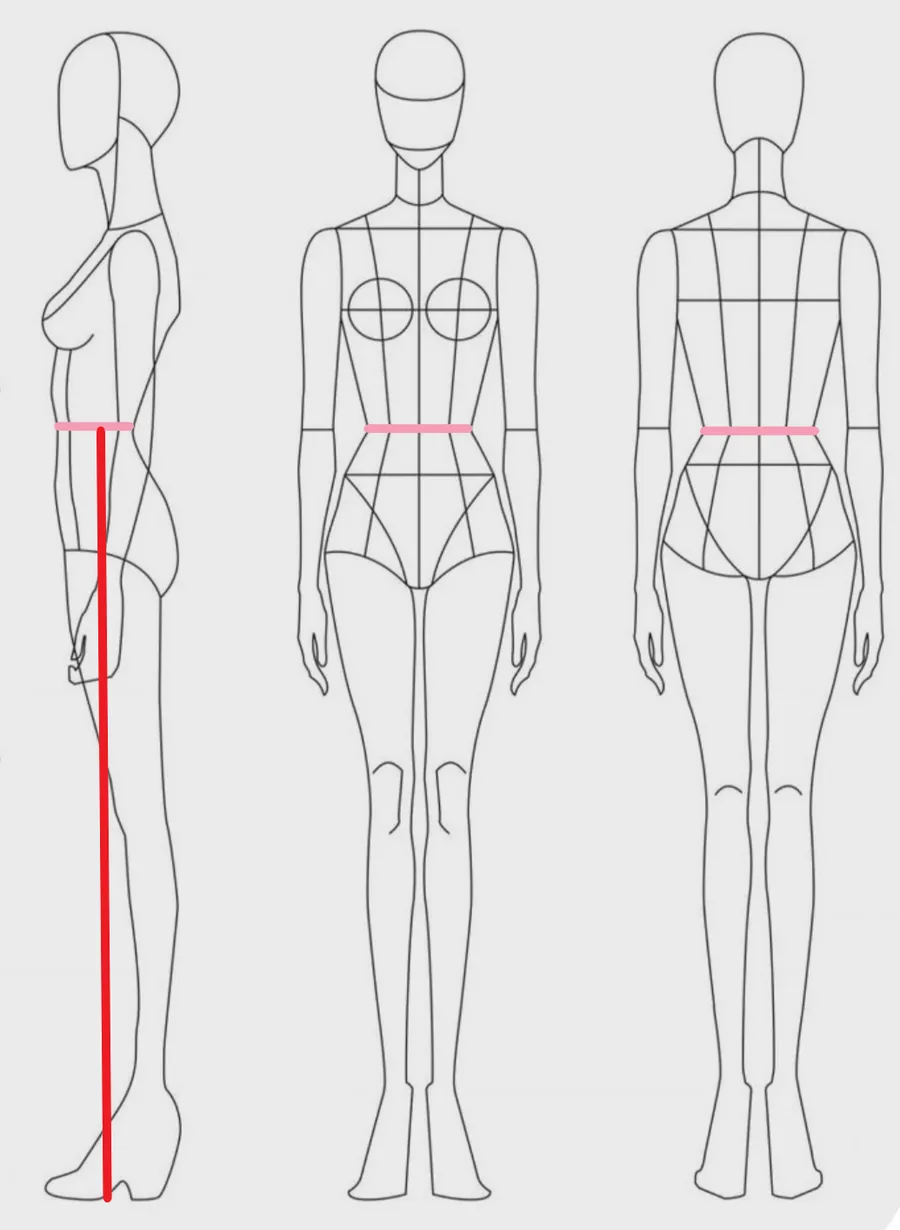
Side waist height
Measured from the elastic band around the waist down to the floor along the most prominent part of the side (the side seam line).
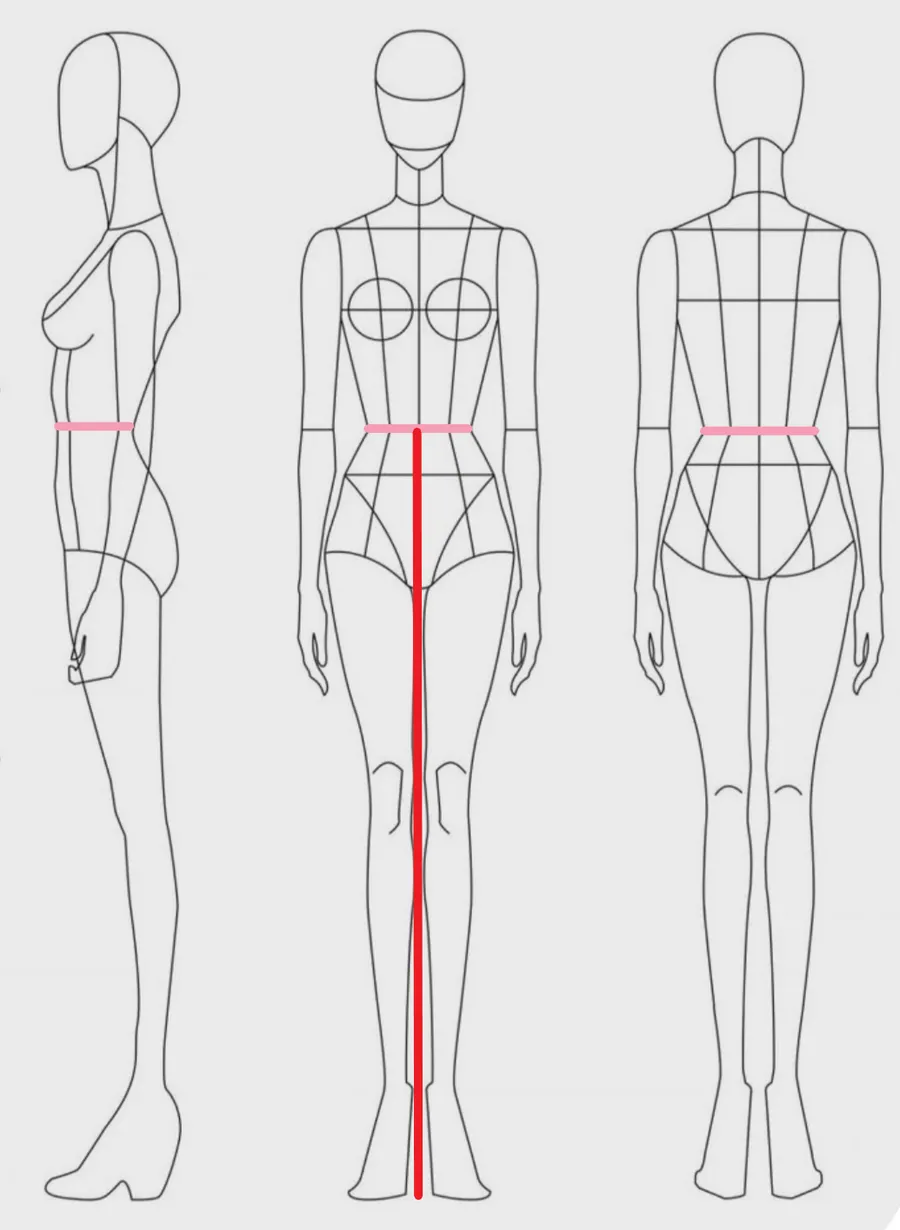
Front waist height
Measured from the elastic band around the waist down to the floor along the center front.
Skirt length
Measured from the elastic band around the waist down to the desired length along the most prominent part of the side.
Ready to generate your pattern?
Every measurement above is also illustrated inline while you enter it in the app. Previewing your pattern is free.
Create free account →